


The ultimate guide to office lighting
How workplace lighting shapes productivity, wellbeing, and sustainable office design
Modern offices are undergoing a profound transformation. As workplace expectations evolve, office lighting has become one of the most influential elements in workplace design. No longer viewed simply as a technical requirement, lighting is now recognised as a critical factor affecting employee wellbeing, productivity, sustainability, and overall workplace experience. For architects and interior office designers, workplace lighting is no longer just about achieving sufficient illumination levels. It is about creating environments that support focus, collaboration, comfort, and flexibility while meeting increasingly demanding sustainability standards. The rise of hybrid working has accelerated this shift. Employees who can work from home now expect offices to offer something more: better experiences, improved comfort, healthier environments, and inspiring spaces that support both individual and collaborative work. Effective office lighting plays a crucial role in delivering these experiences.
Why office lighting matters more than ever
Light influences nearly every aspect of human performance. Research consistently shows that lighting affects:
- Cognitive performance
- Alertness
- Mood
- Sleep quality
- Visual comfort
- Workplace satisfaction
- Productivity
Poor lighting can contribute to headaches, eye strain, fatigue, and reduced concentration. Conversely, well-designed workplace lighting can improve comfort, engagement, and efficiency throughout the working day. For modern offices, lighting is no longer an afterthought. It is a strategic design tool.
The evolution of workplace lighting design
From fluorescent offices to human-centric lighting
For decades, office lighting was dominated by fluorescent fixtures designed primarily around efficiency and cost reduction. While functional, these systems often created visually flat and uncomfortable environments. Today's offices require more sophisticated solutions. Human-centric lighting places people at the centre of the design process. Instead of focusing solely on illumination levels, designers consider how lighting impacts biological rhythms, psychological well-being, and workplace performance. This approach aligns lighting with users' natural needs rather than purely technical requirements.
Understanding the science behind office lighting
How light affects the human brain
Light influences the production of hormones that regulate alertness and sleep. Exposure to appropriate light levels during working hours helps maintain:
- Focus
- Energy levels
- Mental clarity
- Emotional balance
Insufficient lighting can reduce alertness, while excessive brightness may cause discomfort and visual fatigue. Effective office lighting creates balanced environments that support sustained cognitive performance.
Circadian rhythms and workplace performance
Circadian rhythms regulate the body's internal clock. Lighting directly affects these biological processes. Modern workplace lighting increasingly incorporates dynamic lighting systems that mimic natural daylight patterns. These systems support healthy circadian function by providing cooler light during periods requiring focus and warmer light during relaxation or informal collaboration.
How to choose office lighting
Selecting the right office lighting requires a comprehensive understanding of how the space is used.
Assessing space function and user needs
Different office zones require different lighting strategies.
Examples include:
|
Office area |
Primary lighting objective |
|---|---|
|
Open workspace |
Focus and visual comfort |
|
Meeting room |
Collaboration and communication |
|
Lounge area |
Relaxation and social interaction |
|
Quiet room |
Concentration and reduced stimulation |
|
Reception |
Brand identity and welcome experience |
Lighting should always respond to the activities taking place within each zone.
Balancing natural and artificial light
Natural daylight remains the most valuable light source in office environments.
Designers should maximise daylight access while using artificial lighting to complement changing conditions throughout the day.
Lighting layers in modern offices
Successful office lighting combines multiple layers:
- Ambient lighting
- Task lighting
- Accent lighting
- Decorative lighting
This layered approach creates depth, flexibility, and visual comfort.
Workplace Lighting and Employee Wellbeing
Employee well-being has become a major priority for employers and designers alike.
Reducing fatigue and eye strain
Poor lighting can lead to:
- Dry eyes
- Headaches
- Reduced concentration
- Visual discomfort
Modern workplace lighting systems help mitigate these issues through:
- Uniform illumination
- Reduced glare
- Appropriate brightness levels
- High-quality LED technology
Supporting neurodiverse work environments
Not all employees experience lighting in the same way. For neurodivergent individuals, excessive brightness, flickering, or high contrast can be particularly challenging. Flexible lighting controls and diverse workspace options support more inclusive office environments.
LEED Lighting: sustainable lighting for modern workplaces
Sustainability has become a fundamental consideration in workplace design.
Understanding LEED lighting requirements
LEED (Leadership in Energy and Environmental Design) certification encourages lighting systems that prioritise:
- Energy efficiency
- Occupant comfort
- Reduced environmental impact
- Smart controls
Lighting contributes significantly to multiple LEED credit categories.
Energy efficiency and environmental impact
High-performance LED systems can reduce energy consumption dramatically compared to traditional lighting technologies. Benefits include:
- Lower operating costs
- Reduced carbon emissions
- Longer product lifecycles
- Improved sustainability performance
For architects targeting LEED certification, lighting strategy becomes a key design consideration.
CRI and colour temperature in office interiors
Among the most important technical factors in office lighting are CRI and colour temperature.
What is CRI, and why does it matter?
CRI (Colour Rendering Index) measures how accurately a light source reveals colours compared to natural daylight. A high CRI is essential in workplaces because it improves:
- Visual clarity
- Material appearance
- User comfort
- Design consistency
Most premium office environments should target CRI values above 90.
Choosing the right colour temperature
Colour temperature significantly influences the atmosphere of a workspace.
Recommended colour temperatures by office zone
|
Zone |
Recommended Colour Temperature |
|---|---|
|
Open office |
4000K |
|
Meeting rooms |
3500K–4000K |
|
Lounge areas |
2700K–3000K |
|
Reception |
3000K–3500K |
|
Focus rooms |
4000K–5000K |
Choosing the appropriate temperature helps support both comfort and performance.
LED lighting for meeting rooms
Meeting rooms present unique lighting challenges.
Lighting for collaboration and video conferencing
Modern meeting rooms must support:
- Face-to-face interaction
- Digital presentations
- Hybrid meetings
- Video conferencing
LED lighting offers significant advantages, including:
- Excellent colour rendering
- Energy efficiency
- Dimming flexibility
- Consistent illumination
Balanced lighting reduces facial shadows and improves camera performance during virtual meetings.
Acoustic and lighting integration
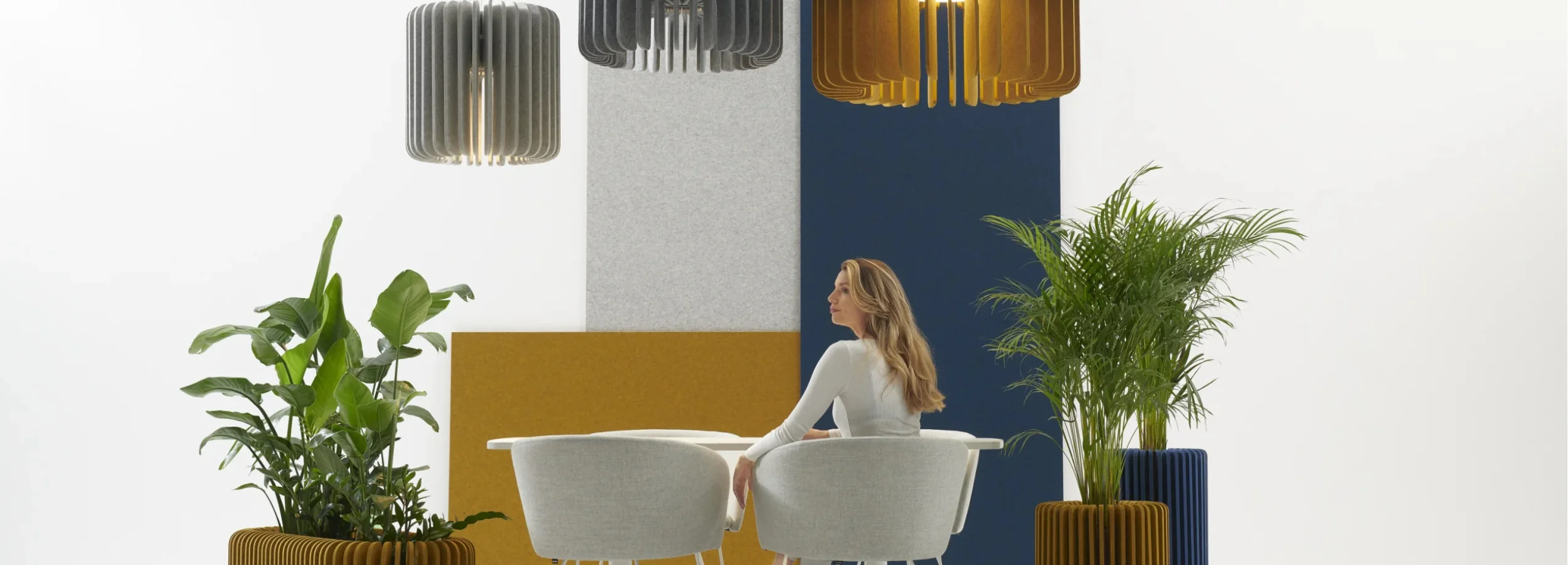
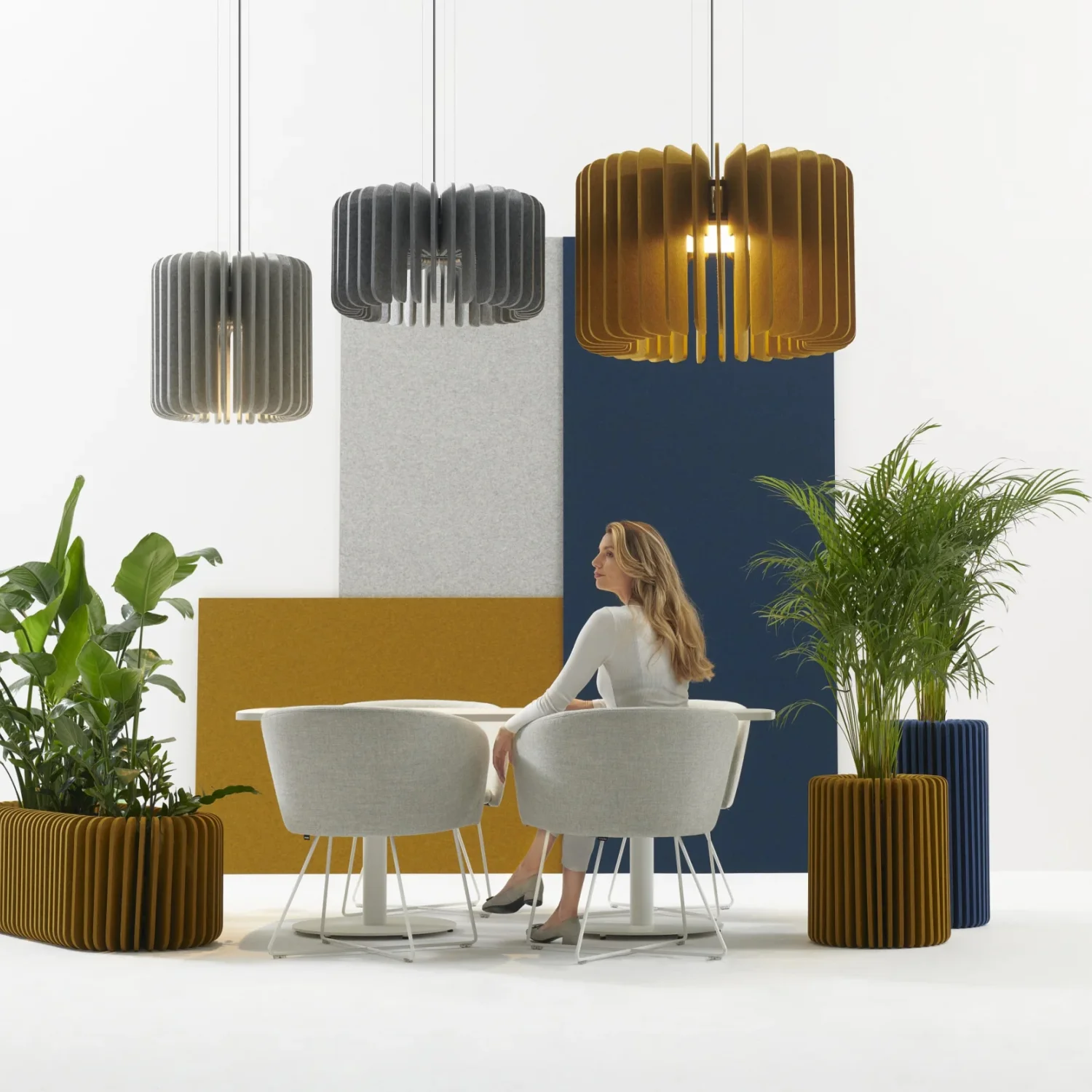
Meeting spaces increasingly benefit from integrated lighting and acoustic solutions. Acoustic pendant luminaires help control reverberation while providing high-quality illumination. This dual functionality improves both visual and auditory comfort.
DALI Dimming in workplace lighting
What is DALI?
DALI (Digital Addressable Lighting Interface) is an intelligent lighting control system widely used in commercial environments. Unlike conventional switching systems, DALI allows individual control of luminaires and lighting groups.
Benefits of intelligent lighting control
DALI systems provide:
- Energy savings
- Personalised user control
- Occupancy-based automation
- Daylight harvesting
- Enhanced comfort
For architects designing flexible workplaces, DALI dimming represents a powerful tool for adaptive lighting environments.
Pendant lighting for modern offices
Pendant lighting has become a defining feature of contemporary office interiors.
Aesthetic and functional advantages
Pendant luminaires offer:
- Visual identity
- Spatial definition
- Improved illumination quality
- Architectural character
They can help define collaborative areas, workstations, and circulation zones.
Acoustic pendant lighting solutions
Innovative manufacturers increasingly combine lighting with acoustic performance. Felt, upholstered, and ecoPET pendant luminaires can simultaneously:
- Illuminate spaces
- Absorb sound
- Improve comfort
- Strengthen interior aesthetics
These solutions are particularly valuable in open-plan offices.
Lighting and acoustics: designing a multi-sensory workplace
The most successful workplace environments consider multiple sensory experiences simultaneously. Employees do not experience lighting independently from acoustics, materials, or spatial design. Integrated solutions that combine:
- Light
- Colour
- Acoustics
- Texture
- Comfort
create workplaces that feel better, perform better, and support a wider range of working styles. This holistic approach increasingly defines best practice in workplace design.
Common office lighting mistakes architects should avoid
1. Overreliance on uniform lighting
Not every workspace requires the same level of illumination.
2. Ignoring glare control
Excessive glare significantly reduces comfort.
3. Choosing incorrect colour temperatures
Lighting should align with function and user experience.
4. Neglecting lighting controls
Smart controls improve both comfort and sustainability.
5. Separating lighting from acoustics
The most effective environments integrate both disciplines.
Future trends in office lighting design
Emerging trends include:
- Human-centric lighting
- Circadian lighting systems
- Smart building integration
- Wireless controls
- Acoustic lighting products
- Sustainable materials
- Adaptive workplace environments
As offices continue evolving, lighting will become increasingly personalised and responsive.
Frequently Asked Questions
What is the best office lighting for productivity?
High-quality LED lighting with appropriate brightness levels, a CRI above 90, and colour temperatures around 4000K generally supports productivity most effectively.
How does LEED lighting improve workplace performance?
LEED lighting promotes visual comfort, energy efficiency, and healthier indoor environments, all of which contribute to improved workplace performance.
What colour temperature is best for office interiors?
Most workspaces benefit from 3500K–4000K lighting, while relaxation zones may use warmer temperatures.
Why is CRI important in office lighting?
High CRI improves colour accuracy, visual comfort, and overall user experience.
What are the benefits of DALI dimming?
DALI provides flexible control, energy savings, personalised lighting scenes, and enhanced user comfort.
Are pendant lights suitable for modern offices?
Yes. Pendant lighting combines aesthetics, functionality, and increasingly acoustic performance, making it highly suitable for contemporary workplaces.
Office lighting has evolved from a technical necessity into one of the most powerful tools in workplace design. For architects and interior office designers, effective workplace lighting influences far more than visibility. It shapes wellbeing, productivity, sustainability, collaboration, and employee experience. Whether designing LEED-certified workplaces, specifying LED lighting for meeting rooms, optimising CRI and colour temperature, implementing DALI dimming systems, or incorporating pendant lighting for modern offices, the goal remains the same: creating workplaces that support people as effectively as possible. The future of workplace lighting is intelligent, sustainable, human-centred, and deeply integrated with the broader office experience.
More news
See all
flexxica at ORGATEC 2026
See flexxica products at ORGATEC 2026, taking place from October 27–30, 2026, at the Koelnmesse trade fair centre in Cologne, at the Glass System stand.
flexxica at Architect@Work Paris 2026
flexxica will be exhibiting at Architect@Work Paris on 21–22 October 2026 at the Grande Halle de la Villette. Come and see our acoustic lighting solutions in person.


