


The most expensive mistake in office design
One wrong lighting decision costs more than an expensive luminaire
The hidden cost of getting it wrong
When companies move into a new office or refurbish an existing one, budgets are scrutinised line by line. Furniture, IT infrastructure, flooring, and partitioning all receive careful consideration. Lighting, however, is often treated as a commodity something to be resolved quickly and cheaply so that the project can move forward. This is, without question, the most expensive mistake in modern office design.
It is not expensive because luminaires carry a high price tag. It is expensive because the wrong lighting decision silently multiplies its cost daily and across every single member of your workforce. Poor light quality causes eye strain, persistent headaches, and a measurable reduction in cognitive performance. It disrupts the human circadian rhythm, leaving employees fatigued by mid-morning and unable to recover meaningful focus for the rest of the day. In 2026, with hybrid work models raising the stakes on in-office productivity, no organisation can afford to underestimate what happens when people work under inadequate light.
This article examines the full cost of poor office lighting, the science that explains why it matters, the compounding role of acoustics, and how approaching both challenges together, rather than separately, is the defining quality decision for any forward-thinking workplace.
What poor office lighting actually costs
The standard argument for choosing budget luminaires is straightforward: the purchase price is lower. This calculation ignores everything that happens after installation.
Research consistently shows that employees working under poor artificial lighting report significantly higher levels of visual discomfort within two to three hours of starting work. Eye strain is not a minor inconvenience. It is a physiological response that forces the brain to allocate additional cognitive resources to the basic task of seeing clearly, leaving fewer resources available for the actual work at hand. The result is slower task completion, more errors, and a gradual erosion of output quality that no manager directly attributes to the lighting, because the connection is rarely obvious.
Then there is absenteeism. Chronic headaches caused by flickering light sources or poorly managed glare are a recognised contributor to sick leave. One or two additional sick days per employee per year, multiplied across a team of fifty, represents a loss in productivity that far exceeds the price difference between a budget luminaire and a professional-grade acoustic lighting fixture.
There is also the turnover consideration. Workplace comfort is one of the most cited factors in employee satisfaction surveys. Offices that fail to provide a physically comfortable environment, including adequate, high-quality lighting, contribute to lower morale and, ultimately, higher staff turnover. The cost of recruiting and onboarding a replacement employee typically ranges from 6 months to more than a year of that person's salary. Against that figure, the investment in quality lighting is negligible.
The arithmetic is clear. Cheap lighting is not a saving. It is a deferred expenditure that accumulates with interest.
The science: how light affects human performance
To understand why lighting quality has such a profound effect on people at work, it is necessary to consider how the human body responds to light not just visually but also biologically.
Circadian rhythm and the office environment
The human circadian rhythm is a roughly 24-hour internal clock that governs sleep, alertness, hormone production, and metabolic function. This clock is primarily regulated by light, specifically by the intensity and colour temperature of the light to which we are exposed throughout the day.
In a natural outdoor environment, light is dynamic. Morning light is warm and relatively low in intensity. As the day progresses, light becomes cooler and brighter, signalling to the brain that it is time to be alert and active. In the late afternoon and evening, warmth returns, signalling the approach of rest.
Most office environments do nothing to replicate this pattern. Fixed luminaires with a single colour temperature deliver the same quality of light at 8 a.m. as at 4 p.m. This static exposure fails to support the natural arc of human alertness, contributing to the mid-afternoon energy slump so commonly accepted as a normal feature of office life when, in fact, it is, at least in part, an environmental problem with an environmental solution.
High-quality professional luminaires, particularly those with tunable white capability, can be programmed to shift colour temperature across the day, delivering cooler, higher-intensity light during peak working hours and warmer, softer light in the late afternoon. This approach, sometimes called human-centric lighting or circadian lighting, has been shown in multiple workplace studies to improve alertness, reduce fatigue, and support better sleep quality among employees with corresponding gains in daily output.
Glare, flicker, and cognitive load
Beyond circadian effects, two specific characteristics of low-quality light sources glare and flicker have measurable impacts on cognitive performance.
Glare occurs when a light source is excessively bright relative to its surroundings, or when light is poorly diffused, creating harsh contrasts within the visual field. The eye continuously attempts to adapt to these variations, leading to muscular fatigue and a sustained, low-level distraction that is cognitively costly. Workstations positioned beneath or adjacent to unshielded luminaires, or near windows without adequate solar control, are particularly susceptible.
Flicker is the rapid, often imperceptible oscillation in light output caused by inadequate electrical components in budget luminaires. While the conscious eye may not register this flicker, the visual cortex does so and responds with increased neural activity to stabilise the perceived image. The outcome is headaches, difficulty concentrating, and an accelerated sense of visual fatigue. Quality LED luminaires with high-frequency drivers and flicker-free specifications eliminate this problem entirely.
Colour rendering and visual accuracy
A further consideration is the Colour Rendering Index, or CRI, a measure of how accurately a light source renders the colours of objects compared to natural daylight. A CRI of 100 represents perfect rendering; most budget luminaires operate in the range of 70–80, while professional-grade fixtures typically achieve 90 or above.
In practical terms, low CRI means that materials, screens, documents, and faces appear slightly distorted in colour. This may seem minor, but in industries where colour accuracy matters design, architecture, branding, retail it has direct professional consequences. Even in general office environments, low CRI contributes to a subtle visual fatigue as the brain works to interpret a slightly inaccurate visual environment throughout the day.
The acoustics problem: why lighting alone is not enough
Any serious analysis of office environment quality must address acoustics alongside lighting. The two challenges are distinct in nature but identical in their consequences: both, when poorly managed, drain the cognitive resources of everyone working in the space.
In 2026, noise pollution remains the single most common complaint in open-plan offices. The shift toward collaborative, open working environments over the past two decades has created spaces that are visually dynamic, socially connected, and acoustically chaotic. Sound reverberation from hard ceiling surfaces, glass partitions, polished concrete floors, and the general density of people and technology in a modern office creates an environment where background noise levels regularly reach 65–70 decibels, comparable to a busy restaurant.
At these levels, the effort required to maintain concentration on complex cognitive tasks increases substantially. Research from cognitive psychology consistently shows that irrelevant speech conversations that are audible but not directed at the listener are one of the most disruptive forms of noise for knowledge workers. The brain cannot entirely suppress the processing of recognisable language, meaning that nearby conversations consume cognitive bandwidth whether or not the employee is consciously listening.
The consequences mirror those of poor lighting: slower task completion, more errors, higher stress levels, and greater fatigue at the end of the working day. And, critically, the effects of poor lighting and poor acoustics are not merely additive; they compound one another. An employee already managing visual fatigue from inadequate light has fewer cognitive resources available to filter out acoustic distractions.
This is why treating lighting and acoustics as separate line items to be resolved independently, by different suppliers at different stages of a fit-out, is itself a design error. The two challenges demand an integrated response.
The integrated solution: acoustic lighting
The most significant development in professional office specification in recent years is the emergence of acoustic lighting as a category of luminaires that address both illumination quality and ambient sound management in a single, architecturally coherent fixture.
Acoustic lighting fixtures incorporate high-performance sound-absorbing materials, typically dense, porous fabrics or foams, within the luminaire body. When suspended from the ceiling as pendant lights, these fixtures hang directly within the room's acoustic space, intercepting sound waves before they reach reflective ceiling surfaces. The result is a measurable reduction in reverberation time without the need for separate wall panels, ceiling baffles, or acoustic tiles.
The practical advantages
The advantages of this integrated approach extend well beyond acoustic performance.
Ceiling space and design clarity. In a well-specified open-plan office, achieving the recommended reverberation time of 0.4–0.6 seconds typically requires significant acoustic treatment that, if applied as separate panels or baffles, would occupy substantial ceiling and wall space and often conflict with the visual identity the interior designer is trying to achieve. Acoustic lighting resolves this tension. The luminaire is already a necessary element of the space; giving it acoustic properties is an efficient use of a fixture that must be there regardless.
Installation efficiency. Combining lighting and acoustic treatment in a single product reduces the number of contractors, installation visits, and coordination points required during a fit-out. It also simplifies ongoing maintenance, since there is no separate inventory of acoustic components to inspect, clean, or replace.
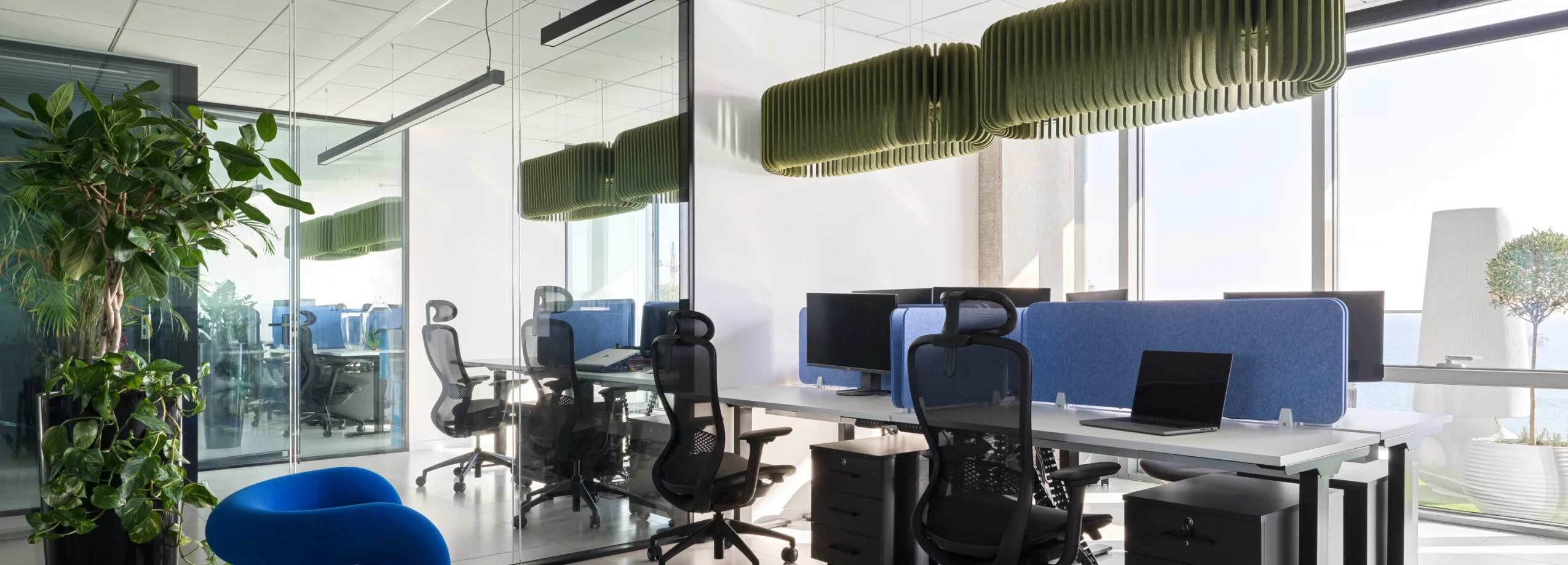
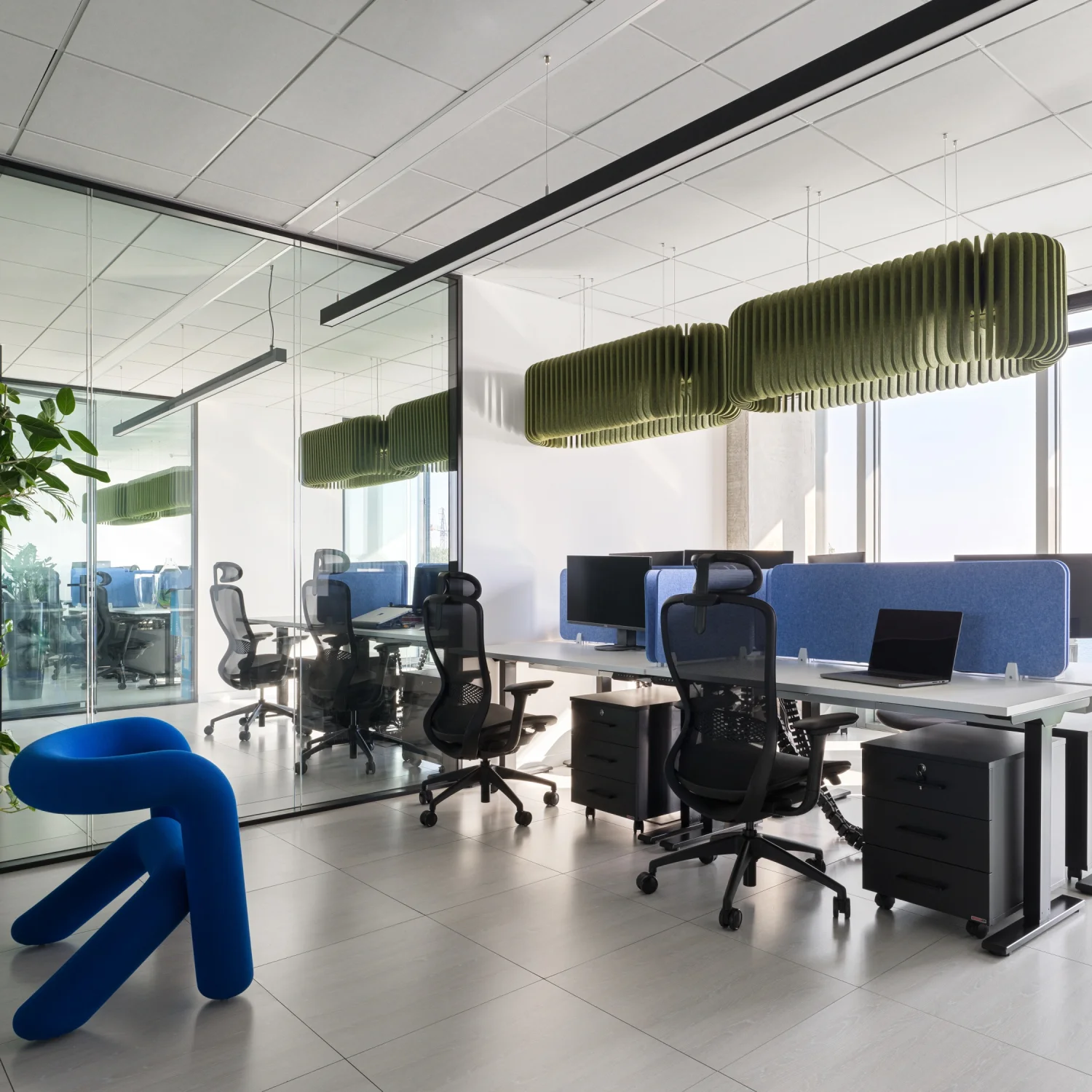
Aesthetic coherence. Acoustic panels, however well designed, are perceived by most building users as remedial something added to fix a problem. Acoustic lighting, by contrast, is a design-led product that enhances the visual quality of the space while solving the acoustic challenge. The best acoustic luminaires, including Flexxica's Sol, Zen, and Alpha Duo ranges, are objects that an interior designer would choose for their visual contribution alone. That they also deliver high-performance sound absorption is the specification advantage.
flexxica: a professional specification choice
Flexxica's approach to acoustic lighting is grounded in the same principle underpinning this article: quality is not a luxury category but a performance decision. Every fixture in the Flexxica range is designed to meet the dual demands of professional illumination and meaningful acoustic contribution, without compromising on either.
Sol acoustic luminaire is designed for workstation and task environments, delivering focused, high-quality illumination with a consistent colour temperature and high CRI, and sound-absorbing materials that reduce reverberation in the immediate work zone. Sol is particularly suited to open-plan offices where individual focus areas need both good task light and acoustic separation from surrounding activity.
Zen acoustic luminaire takes a softer, more organic approach, combining acoustic performance with a warmer, more considered aesthetic. It is well suited to breakout areas, informal meeting spaces, and environments where the visual character of the space is as important as its functional performance. Zen creates an atmosphere of calm not incidentally, but because it is engineered to reduce both sonic and visual stress simultaneously.
Alpha Duo demonstrates that acoustic performance need not be limited to a pendant format. Where wall-mounted or ceiling-panel solutions are architecturally appropriate, Alpha Duo delivers high NRC-rated absorption with a finish quality that integrates naturally into premium interior schemes. It represents the dedicated panel option for projects that require targeted treatment of specific reflection surfaces, often used in combination with pendant acoustic lighting to address the full acoustic profile of a space.
Together, these products give specifiers the tools to address both lighting quality and acoustic performance across every zone of a modern office, from individual workstations to meeting rooms, and from reception areas to collaborative hubs.
Designing the office correctly: a strategic framework
Given everything outlined above, how should a company or its design team approach the challenge of office lighting and acoustics? The following framework reflects current best practice for professional specification.
Start with performance targets, not products. Before selecting any luminaire or acoustic treatment, define the performance parameters the space must achieve: target lux levels at workstation height, desired colour temperature range, acceptable reverberation time, and NRC requirements for the primary acoustic surfaces. These targets should be set by reference to the type of work carried out in the space and the number of people who will occupy it.
Consider lighting and acoustics together from the outset. The most efficient and cost-effective outcomes come from treating these two challenges as a single design problem rather than two separate ones. This means involving your acoustic lighting supplier, such as Flexxica, at concept stage, not after the ceiling grid has been fixed.
Zone the space by activity. Different areas of an office have different lighting and acoustic requirements. Focus zones need higher task lighting levels and greater sound absorption. Collaboration zones benefit from slightly warmer lighting and acoustic treatment that reduce spill into adjacent areas without requiring complete silence. Reception and front-of-house spaces call for a balance of ambient quality and visual impact. Specifying products by zone yields more effective results than applying a single solution across the entire floor plate.
Invest in circadian capability where the budget allows. Tunable white lighting luminaires that can shift colour temperature across the day represent the most significant performance upgrade available in professional office lighting. In environments where employee wellbeing and sustained productivity are strategic priorities, the investment is consistently justified by the outcomes.
Evaluate total cost, not unit cost. Every lighting and acoustic specification decision should be assessed against the total cost of ownership, not the product's purchase price. A professional acoustic lighting fixture that supports employee performance, reduces sick leave, and lasts 15 years without maintenance issues is cheaper, in any meaningful sense, than a budget luminaire replaced every 5 years in an environment that costs the business productivity every single day.
The decision that defines the workplace
The most expensive mistake in office design is not commissioning an overly ambitious interior scheme or choosing the wrong furniture system. It is making a poor decision about lighting a decision that affects every person in the building, every hour of every working day, for the entire lifespan of the fit-out.
The good news is that this is also one of the most correctable mistakes, and one where the difference in quality between the wrong choice and the right one is increasingly visible, measurable, and commercially justifiable. Professional acoustic lighting designed to deliver both superior illumination and meaningful sound absorption represents the most intelligent response to the dual challenges of visual comfort and acoustic quality that define the modern office environment.
Companies that understand this are not spending more on their offices. They are spending more wisely. They are creating environments where people can think clearly, communicate effectively, and sustain their performance throughout a full working day, which is ultimately what an office is for.
Flexxica exists to make that outcome achievable, through products that take both light and sound seriously, and through the expertise to specify them correctly for every space and every project.
More news
See all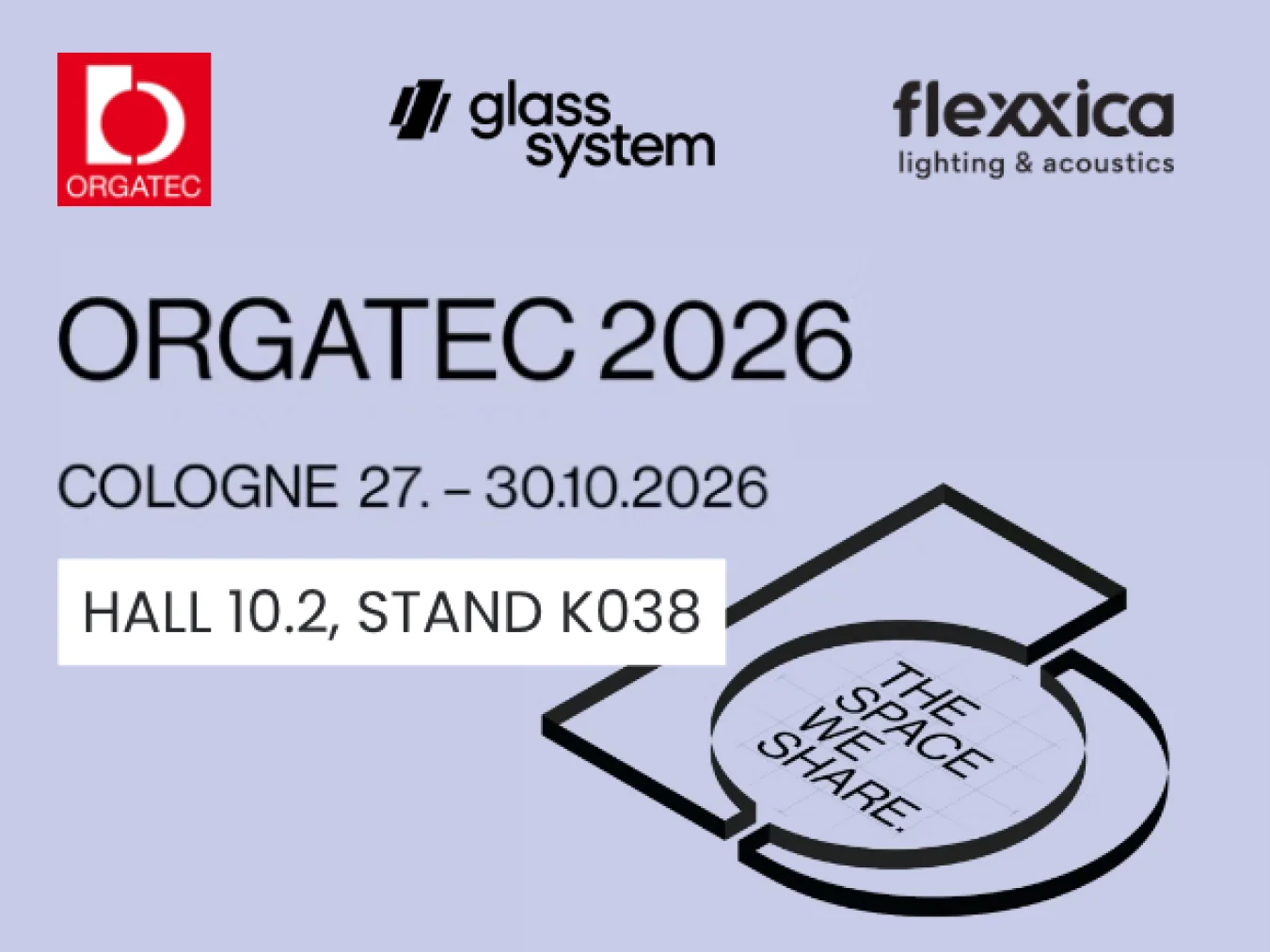
flexxica at ORGATEC 2026
See flexxica products at ORGATEC 2026, taking place from October 27–30, 2026, at the Koelnmesse trade fair centre in Cologne, at the Glass System stand.
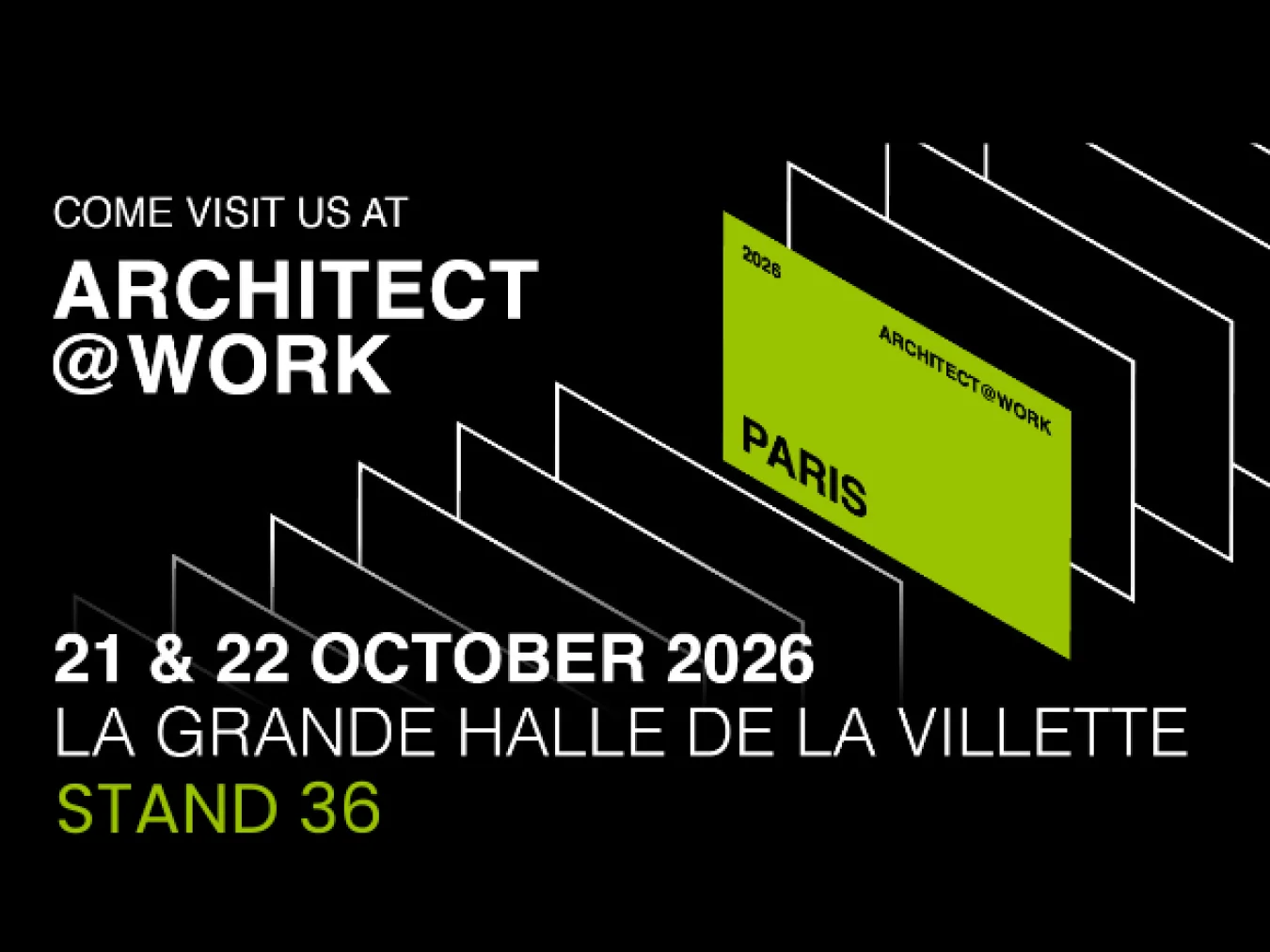
flexxica at Architect@Work Paris 2026
flexxica will be exhibiting at Architect@Work Paris on 21–22 October 2026 at the Grande Halle de la Villette. Come and see our acoustic lighting solutions in person.


