


Office lighting & acoustics: boost productivity 2026
How optimal office lighting and acoustics in 2026 enhance focus, reduce stress, and improve employee well-being and productivity?
Illuminating productivity: the crucial link between office lighting and acoustics
In today's dynamic work environments, the quest for optimal productivity and employee well-being has never been more intense. While many focus on ergonomic furniture and advanced technology, two often-overlooked pillars of office design that significantly impact how we feel, function, and perform are office lighting and acoustics. These elements, working in tandem, create the invisible atmosphere that can either hinder or enhance our daily work lives. Consider this: poor lighting can lead to eye strain and fatigue, while disruptive noise can shatter concentration and increase stress. Together, they form a powerful duo influencing everything from task completion speed to overall job satisfaction. Research consistently shows that environments that prioritise both visual comfort and auditory calm lead to measurable improvements in employee performance and reductions in errors. For instance, a study by the National Bureau of Economic Research examined how workplace environmental factors can affect productivity, highlighting the significant, though often unquantified, impact of elements such as lighting and noise.
This article delves deep into the intricate relationship between office lighting and acoustics, exploring how thoughtful design in both areas can transform a standard workspace into a haven of focus, creativity, and overall health. We will examine the science behind effective lighting, the detrimental effects of poor acoustics, and, crucially, how to integrate the two for maximum benefit.
The science of sight: understanding effective office lighting
Lighting is more than just making a space visible; it's about creating an environment that supports human physiology and psychology. The right lighting can boost alertness, improve mood, and reduce physical discomfort, while the wrong kind can do the opposite.
Types of office lighting
To understand effective lighting, we first need to recognise the different types employed in office settings:
- Ambient lighting: The general illumination of a space. It provides a comfortable level of brightness without being the sole source of light. Think of overhead fluorescent or LED panels that light up the entire room. The goal is to provide a uniform light level that allows for safe movement and general visibility.
- Task lighting: localised lighting designed to illuminate specific work areas, such as a desk, a meeting table, or a reception counter. Task lighting is crucial for detailed work, helping to reduce eye strain and improve focus on the task at hand. Examples include desk lamps or under-cabinet lighting.
- Accent lighting: used to draw attention to specific features, such as artwork, architectural details, or displays. While less critical to core productivity, accent lighting can enhance the aesthetic appeal and overall ambience of an office.
- Decorative lighting: this type of lighting is purely aesthetic, adding visual interest and style to a space. Chandeliers or unique pendant lights fall into this category.
Key Lighting Metrics and Considerations
Several factors determine the quality and effectiveness of office lighting:
- Illuminance (Lux): This measures the amount of light that falls on a surface. Different tasks require different levels of illuminance. For example, general office work might need around 300-500 lux, while detailed tasks like drafting or intricate computer work may require 750-1000 lux. The Illuminating Engineering Society (IES) provides detailed recommendations for various work environments.
- Colour Temperature (Kelvin): This refers to the perceived warmth or coolness of light. Lower Kelvin values (e.g., 2700-3000K) produce warm, yellowish light, often associated with relaxation. Higher Kelvin values (e.g., 4000-6500K) produce cool, bluish light, which can enhance alertness and concentration. For offices, a neutral-to-cool white light (around 4000K) is often recommended to promote focus without causing eye strain.
- Colour Rendering Index (CRI): This measures how accurately a light source reveals the true colours of objects compared to a natural light source. A high CRI (90+) ensures that colours appear vibrant and natural, which can be important for tasks involving colour discernment and contributes to a more visually comfortable environment.
- Glare: Glare is excessive brightness that can cause visual discomfort and reduce visibility. It can be direct (from a light source) or indirect (reflected off surfaces). Minimising glare through proper fixture placement, diffusion, and the avoidance of highly reflective surfaces is paramount.
- Flicker: Inconsistent illumination from some older lighting technologies can cause imperceptible flicker, which has been linked to headaches, eye strain, and fatigue. Modern LED lighting typically offers flicker-free options.
- Daylighting: Maximising natural light is highly beneficial. Daylighting can improve mood, reduce energy consumption, and provide a more dynamic and pleasant visual experience. However, it needs to be managed to prevent glare and excessive heat gain.
The Impact of Lighting on Productivity and Well-being
The relationship between lighting and human performance is well-documented:
- Alertness and Cognitive Function: Cooler, brighter light (higher Kelvin, sufficient lux) has been shown to increase alertness and improve cognitive performance, including reaction time and memory recall. This is partly due to its effect on the circadian rhythm, the body's internal clock. Exposure to bright light, especially in the morning, can help synchronise our internal clock, leading to better sleep-wake cycles and improved daytime alertness.
- Mood and Morale: Light significantly influences mood. Natural daylight is often associated with improved mood and reduced symptoms of seasonal affective disorder (SAD). In an office setting, well-designed artificial lighting that mimics natural light can contribute to a more positive and energetic atmosphere.
- Eye Strain and Fatigue: Insufficient light, excessive glare, and flickering lights are major contributors to eye strain, headaches, and general fatigue. This can lead to decreased productivity and increased errors.
- Circadian Rhythm Disruption: Exposure to light, particularly blue light, at the wrong times of day can disrupt the body's natural circadian rhythm. This can lead to sleep disturbances, reduced daytime alertness, and long-term health issues. While bright, cool light is good during the workday, exposure to such light in the evening can interfere with melatonin production, making it harder to fall asleep.
The sound of silence: mastering office acoustics
While lighting deals with what we see, acoustics deals with what we hear. In an open-plan office, the cacophony of clicking keyboards, ringing phones, conversations, and machinery can be a significant source of distraction and stress. Effective acoustic design aims to control sound, reduce noise pollution, and create a more focused and comfortable auditory environment.
Understanding sound in the office
To manage acoustics, we need to understand how sound behaves:
- Sound Sources: These are the origins of noise, such as human speech, printers, HVAC systems, and external traffic.
- Sound Transmission: How sound travels from its source to a listener. This can be through the air (airborne sound) or through solid structures (structure-borne sound).
- Sound Reflection: When sound waves bounce off surfaces like walls, ceilings, and floors. Excessive reflection can lead to reverberation and echo.
- Sound Absorption: When surfaces absorb sound energy, reducing its intensity and reverberation. Soft materials like carpets, fabric panels, and acoustic foam are good absorbers.
- Sound Insulation: The ability of a barrier (like a wall or window) to block sound from passing through. This is about preventing sound from entering or leaving a space.
Key acoustic metrics and considerations
- Reverberation time (RT60): This is the time it takes for a sound to decay by 60 decibels in a space. A long reverberation time means sound lingers, making speech difficult to understand and creating a noisy, echoey environment. In offices, a shorter reverberation time is desirable.
- Noise reduction coefficient (NRC): This measures a material's ability to absorb sound. An NRC of 0 means the material reflects all sound, while an NRC of 1 means it absorbs all sound. Materials with higher NRC values are better for reducing reverberation.
- Sound transmission class (STC): This rating measures a building partition's (such as a wall or door) ability to block airborne sound. A higher STC rating indicates better sound insulation.
- Background noise levels: The ambient sound level in a space when no specific sound source is dominant. In offices, acceptable background noise levels vary by task, but generally, lower levels are better for concentration. The Occupational Safety and Health Administration (OSHA) provides guidelines on acceptable noise exposure levels.
The detrimental effects of poor acoustics
The impact of a noisy office environment can be profound:
- Reduced concentration and productivity: Constant noise is a major distraction, making it difficult to focus on tasks, especially those requiring deep concentration. This leads to decreased productivity and increased errors. Studies have shown that even intermittent noise can significantly impair cognitive performance.
- Increased stress and irritability: Unwanted noise is a significant source of stress. It can elevate heart rate and blood pressure, leading to increased irritability, frustration, and a general feeling of being overwhelmed. This can negatively impact employee morale and lead to burnout.
- Communication difficulties: In noisy environments, it becomes harder to hear conversations, leading to misunderstandings and prompting people to raise their voices, further exacerbating the noise problem. This is particularly problematic in collaborative settings.
- Health issues: Chronic exposure to high noise levels can contribute to long-term health problems, including hearing loss, sleep disturbances, cardiovascular issues, and mental health challenges.
The synergy of light and sound: creating an optimal workspace
The true magic happens when lighting and acoustics are considered not in isolation, but as interconnected elements of the overall office environment. A space can have perfect lighting but be unbearable due to noise, or it can be acoustically tranquil but dimly lit and depressing. The goal is to create a balanced environment.
Integrating lighting and acoustic design principles
-
Zoning and activity-based design: Different areas within an office serve different purposes. A quiet zone for focused work requires different lighting and acoustic treatment than a collaborative meeting space or a break room.
- Focus Zones: These areas benefit from higher levels of cooler, task-oriented lighting and significant sound absorption to minimise distractions. Consider individual desk lamps, acoustic panels on walls and ceilings, and carpeted floors.
- Collaborative Zones: These areas might benefit from slightly warmer, more ambient lighting to encourage interaction and conversation. Acoustic treatment is still important to prevent conversations from disturbing others, but the goal might be to allow for a comfortable level of ambient sound rather than complete silence.
- Break Areas: These spaces can have warmer, more relaxed lighting and may require less stringent acoustic control, as they are intended for respite.
-
Material selection: The choice of materials plays a dual role in both lighting and acoustics.
- Light Reflectance: Light-colored surfaces reflect more light, helping to brighten a space and reduce the need for artificial lighting. However, highly reflective surfaces can also cause glare. Matte finishes are generally preferred over glossy ones.
- Sound Absorption: Soft, porous materials absorb sound. Using upholstered furniture, fabric-covered partitions, acoustic ceiling tiles, and carpets can significantly improve acoustics. These materials also interact with light differently than hard surfaces; for instance, textured fabrics can diffuse light softly.
-
Fixture placement and design: The physical placement and design of lighting fixtures can impact acoustics, and vice versa.
- Recessed lighting can be unobtrusive but may require careful placement to avoid glare on screens.
- Pendant lights can add visual interest and direct light to specific areas, but their placement needs to consider acoustics. For example, large, hard-surfaced pendant lights could reflect sound.
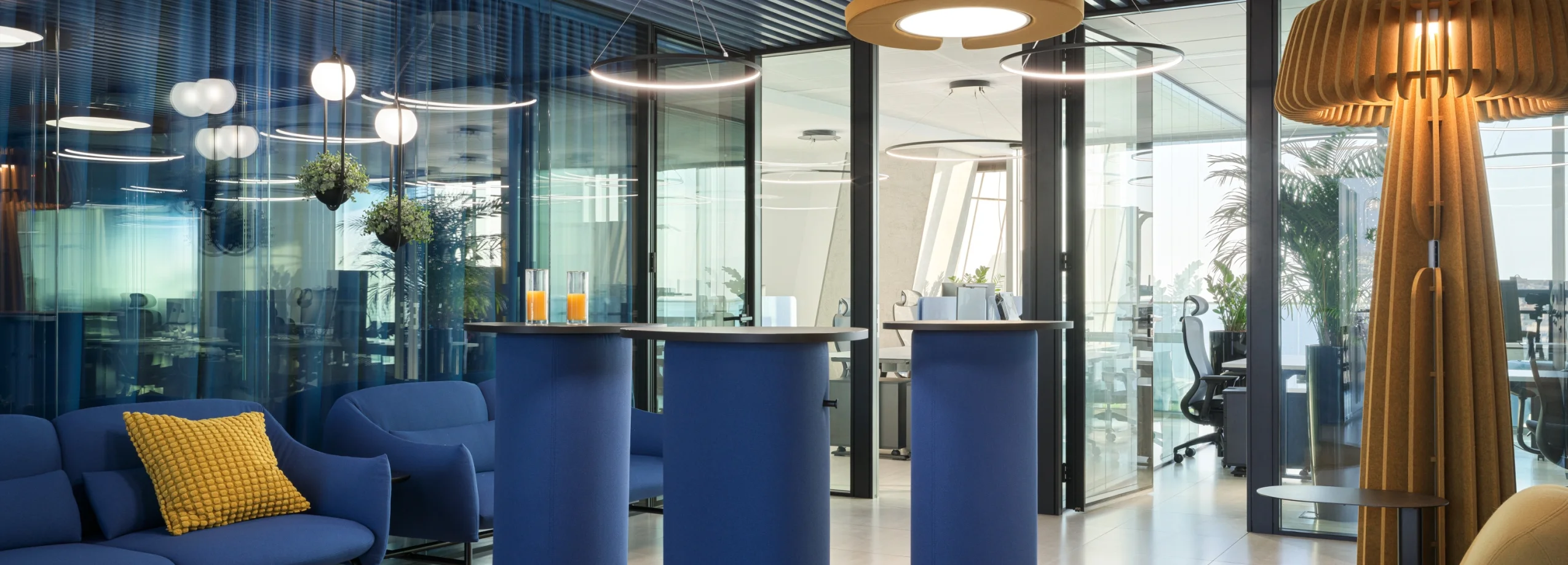
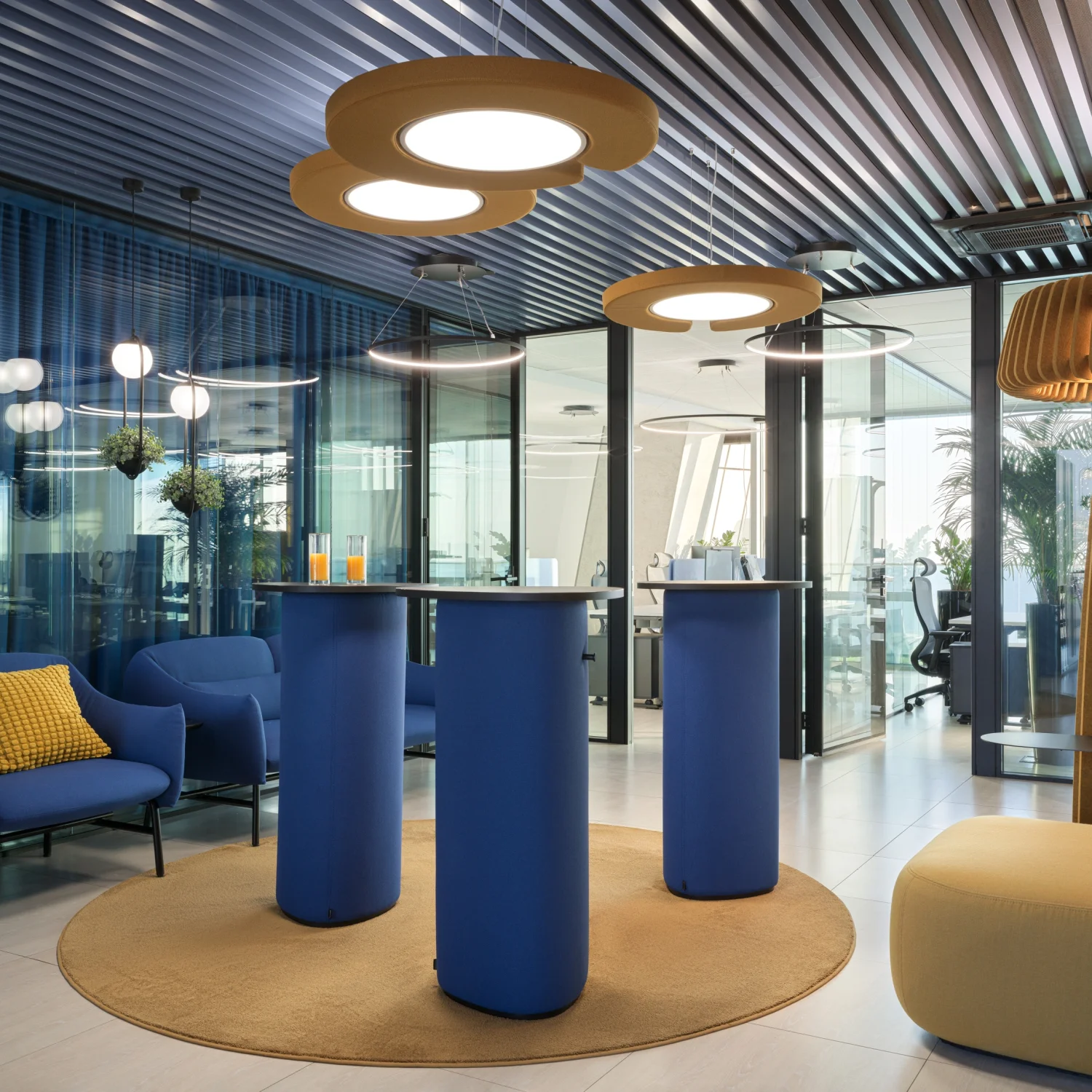
- Acoustic lighting solutions are now available, integrating sound-absorbing materials directly into light fixtures, offering a dual-purpose design element.
-
Circadian lighting systems: Advanced lighting systems can dynamically adjust colour temperature and intensity throughout the day to mimic natural daylight patterns. This supports the body's natural circadian rhythm, enhancing alertness during work hours and promoting relaxation in the evening. When combined with effective acoustic control, these systems create a truly supportive environment.
-
Biophilic design elements: Incorporating natural elements, such as plants and natural materials, can enhance both lighting and acoustics. Plants can help diffuse light and absorb some sound, while natural materials like wood can offer a warmer aesthetic and interact positively with light.
Case studies and expert insights
Numerous organisations have invested in improving their office environments by focusing on lighting and acoustics. Companies that have implemented comprehensive strategies often report:
- Improved employee satisfaction: Employees feel more comfortable, less stressed, and more valued when their work environment is thoughtfully designed.
- Reduced absenteeism: A healthier, less stressful environment can contribute to fewer sick days.
- Enhanced creativity and collaboration: Spaces that are conducive to both focused work and comfortable interaction foster innovation.
- Increased efficiency: Fewer distractions and less fatigue naturally lead to higher output.
Dr Eleanor Vance, an environmental psychologist specialising in workplace design, notes, "We often underestimate the profound impact of our sensory environment. Lighting that's too harsh or too dim, coupled with a constant hum of distracting noise, creates a low-level, chronic stress that erodes focus and well-being over time. Conversely, a space that is visually comfortable and audibly calm can unlock a level of productivity and creativity we rarely see otherwise."
The role of technology
Modern technology offers innovative solutions for both lighting and acoustics:
- Smart lighting controls: Systems that allow for automated adjustments based on occupancy, time of day, and natural light availability. These can optimise energy use and user comfort.
- Tunable white LEDs: These lights can adjust their colour temperature, allowing for a transition from energising cool light during peak work hours to a warmer, more relaxing light as the day winds down.
- Sound masking systems: These systems introduce a low-level, unobtrusive background sound (similar to gentle airflow) that masks distracting noises, making conversations and other intermittent sounds less noticeable. This is particularly effective in open-plan offices.
- Acoustic panels and baffles: These are specifically designed to absorb sound and can be aesthetically integrated into office design, often coming in various colours, shapes, and sizes.
Frequently Asked Questions
What is the ideal illuminance level for an office desk?
The ideal illuminance level for an office desk typically ranges between 300 to 500 lux for general tasks. For tasks requiring more visual precision, such as detailed computer work, reading small print, or drafting, levels of 750 to 1000 lux may be more appropriate. It's also important to consider minimising glare and ensuring even light distribution to prevent eye strain.
How does colour temperature affect productivity?
Colour temperature, measured in Kelvin (K), affects alertness and mood. Cooler colour temperatures (4000K and above), often described as "cool white" or "daylight," tend to promote alertness and concentration. Warmer colour temperatures (below 3000K), known as "warm white," are more relaxing and can be beneficial for break areas or for winding down at the end of the day. For general office work, a neutral-to-cool white light (around 4000K) is often recommended to balance focus and visual comfort.
What are the most effective ways to reduce noise in an open-plan office?
Reducing noise in open-plan offices requires a multi-faceted approach. Key strategies include:
- Sound absorption: Using materials like acoustic ceiling tiles, fabric-covered panels, carpets, and upholstered furniture to absorb sound.
- Sound masking: Introducing a low-level background sound to mask distracting noises.
- Layout and zoning: Creating distinct zones for different activities (e.g., quiet zones for focus work, collaborative zones).
- Barriers: Using partitions, screens, or even plants to break up sound paths.
- Employee awareness: Educating staff on the impact of noise and encouraging considerate behaviour.
Can lighting and acoustics impact employee mental health?
Yes, both lighting and acoustics can significantly impact employee mental health. Poor lighting, such as excessive glare or insufficient illumination, can lead to eye strain, headaches, fatigue, and even exacerbate symptoms of depression. Disruptive noise levels are a major source of stress and irritability and can contribute to anxiety and sleep disturbances. Conversely, well-designed lighting that mimics natural daylight patterns and comfortable, controlled acoustics can reduce stress, improve mood, enhance focus, and contribute to a greater sense of well-being.
How can I balance the need for task lighting with ambient lighting?
Balancing task and ambient lighting involves creating layers of light. Ambient lighting provides the general illumination for the space, ensuring overall comfort and safety. Task lighting is then added to specific workstations or areas where detailed work is performed. The key is to ensure that task lighting is adjustable and directed precisely where needed, without creating glare or overpowering the ambient light. Using dimmable controls for both ambient and task lighting allows for further customisation to suit individual preferences and the specific task being undertaken.
What are the latest trends in office lighting and acoustics?
Current trends include the integration of smart technology for lighting control, tunable white LEDs that adjust colour temperature throughout the day to support circadian rhythms, and biophilic design elements that incorporate natural light and materials. Acoustically, there's a growing focus on integrated solutions, such as acoustic lighting fixtures and sound masking systems in open-plan offices. The emphasis is increasingly on creating adaptable, human-centric spaces that prioritise both well-being and productivity.
The interplay between office lighting and acoustics is a powerful determinant of the modern workplace's success. By understanding the principles of effective illumination and sound management and integrating these elements thoughtfully, organisations can create environments that not only look good but also feel good and perform exceptionally well. Investing in well-lit, acoustically comfortable spaces is not merely an aesthetic choice; it's a strategic decision that directly impacts employee health, happiness, and ultimately, the bottom line. As businesses continue to evolve, prioritising these foundational aspects of office design will be crucial for attracting and retaining talent, fostering innovation, and achieving peak performance in 2026 and beyond. The future of work is illuminated by thoughtful design and hushed by deliberate acoustic planning.
More news
See all
flexxica at ORGATEC 2026
See flexxica products at ORGATEC 2026, taking place from October 27–30, 2026, at the Koelnmesse trade fair centre in Cologne, at the Glass System stand.
flexxica at Architect@Work Paris 2026
flexxica will be exhibiting at Architect@Work Paris on 21–22 October 2026 at the Grande Halle de la Villette. Come and see our acoustic lighting solutions in person.


