


Decorative vs functional office lighting: Do you really need to choose?
Can office lighting be both visually striking and technically sophisticated?
For years, architects and interior designers have faced an apparent trade-off: choose decorative office lighting that creates atmosphere and character, or functional office lighting that delivers the technical performance modern workplaces require.
But what if the most compelling lighting solutions refuse to compromise?
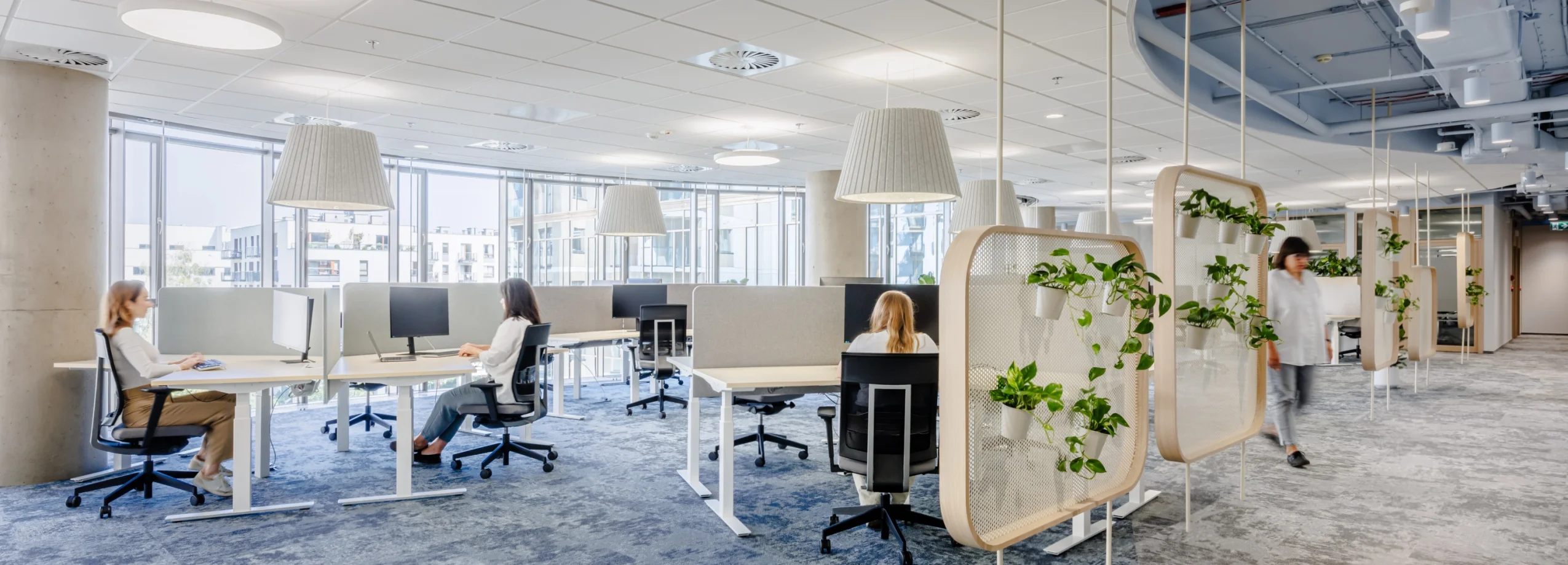
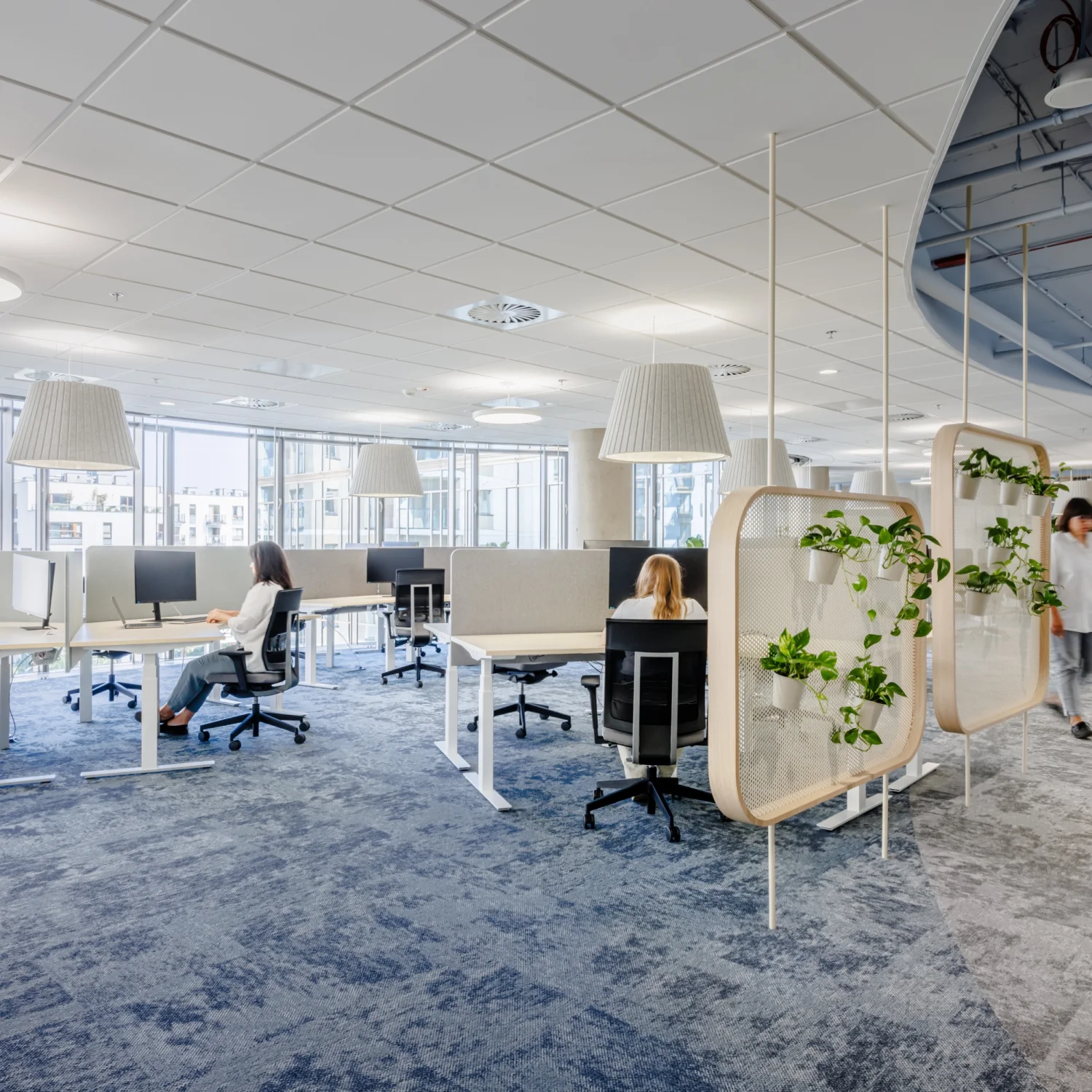
Modern architectural office lighting is increasingly designed to deliver both. Today, design office luminaires can combine distinctive geometry, sophisticated materials and professional LED technology to create spaces that look exceptional and perform effectively.
Another dimension is worth considering: acoustics.
At flexxica, where light meets silence, we believe the best office lighting should do more than illuminate a room. It should contribute to how a workspace looks, sounds and feels. By integrating professional lighting with sound-absorbing materials, we create luminaires that combine architectural expression, lighting performance and acoustic functionality in one solution.
The question is no longer whether to choose decorative or functional lighting. It is how to achieve both, intelligently.
Decorative vs functional office lighting: What's the difference?
Traditionally, decorative and functional lighting have served different purposes in office design.
Decorative office lighting focuses on a space's visual identity and atmosphere. Its form, proportions, colour and materiality become part of the architectural concept. A sculptural pendant can define a reception area, establish the character of a meeting room or create a visual focal point in an open-plan office.
Functional office lighting, by contrast, is designed around measurable lighting performance. It provides appropriate illumination for specific tasks, supports visual comfort and helps create safe, usable working environments.
The distinction becomes clearer when we compare their traditional priorities.
| Feature | Decorative office lighting | Functional office lighting |
|---|---|---|
| Primary purpose | Visual identity and atmosphere | Effective illumination and visual comfort |
| Design approach | Form, material and aesthetics | Photometry, optics and technical performance |
| Typical applications | Receptions, lounges, social areas | Workstations, meeting rooms, focus areas |
| Key considerations | Shape, scale, colour and finish | Illuminance, glare, uniformity and colour rendering |
| Main contribution | Architectural character | Practical working conditions |
| Integrated approach | Combines aesthetic expression with technical performance and, potentially, acoustic absorption | Combines technical performance with architectural design |
These categories are not mutually exclusive. A decorative luminaire can provide the light required for productive work, while a professional lighting fixture can become an expressive architectural feature.
The most effective workplace lighting strategies consider both from the beginning of the design process.
Why office lighting must do more than look good
An attractive office does not automatically provide good lighting conditions.
A beautiful pendant may create an impressive first impression, but if it produces excessive glare, uneven illumination or insufficient light at the workstation, it can compromise visual comfort.
Likewise, a technically efficient lighting system may illuminate desks effectively while doing little to enhance a workplace's atmosphere or architectural identity.
This is why professional lighting design involves more than selecting luminaires by appearance or wattage.
Visual comfort is fundamental
In office environments, employees regularly switch between screens, documents, collaborative activities and face-to-face conversations. Lighting must support these different visual tasks.
A professional lighting specification considers several important parameters:
-
Illuminance (lux): The amount of light reaching a surface. Many conventional office tasks use 500 lux as a design reference, depending on the applicable standard and activity.
-
Unified Glare Rating (UGR): A method of assessing discomfort glare in an installation. UGR 19 is a commonly used limit for many office tasks, but the result depends on the complete lighting arrangement.
-
Colour Rendering Index (CRI/Ra): Indicates how faithfully a light source renders colours compared with a reference. Higher colour rendering can be particularly valuable in design-oriented workplaces.
-
Colour temperature (CCT): Influences the visual appearance of light, from warmer white to cooler white.
-
Lighting control: Dimming, zoning and, where supported, tunable-white technology allow lighting to respond to different activities.
The European standard EN 12464-1 provides a framework for designing appropriate lighting conditions in indoor workplaces, including requirements for illuminance, glare, and visual quality.
These factors should not be regarded as obstacles to creative design. They are the technical foundation that makes architectural lighting genuinely functional.
Architectural identity matters, too
Offices are no longer designed exclusively as places where people sit at desks. They are environments for collaboration, creativity, communication and connection.
Lighting helps define these experiences.
An oversized pendant can establish a visual centre in a collaborative area. A refined linear luminaire can reinforce the geometry of an architectural interior. A sculptural floor lamp can introduce softness into a space dominated by desks, glass and hard surfaces.
Rather than adding decorative lighting as a final layer, architects can make it integral to workplace design.
When design becomes performance: The evolution of architectural office lighting
The most interesting developments in office lighting happen when technical requirements influence the creative process rather than restrict it.
Consider the elements that define a luminaire: its geometry, material, light source, optical system and method of installation.
Every one of these elements can serve both architectural and functional purposes.
A larger lampshade can create an expressive silhouette while accommodating a sound-absorbing surface. A carefully designed optical system can provide useful illumination without dominating the fixture's visual appearance. A suspended luminaire can establish spatial rhythm while delivering targeted light to workstations.
Modern LED technology offers designers considerable freedom to explore these possibilities.
Compact LED modules, precise optical components and intelligent controls allow manufacturers to create design office luminaires that deliver professional lighting performance without looking like conventional technical equipment.
However, successful integration requires more than placing an LED source inside a decorative shade. The complete luminaire must be engineered for its intended application.
Lighting distribution, glare control, heat management, installation conditions and maintenance all influence whether the product performs effectively.
When design resolves these considerations, the result is not a compromise between beauty and performance. It is a more sophisticated form of functional design.
A third dimension: Why acoustic comfort belongs in the lighting conversation
One important factor that traditional comparisons between decorative and functional lighting often overlook is sound.
Contemporary offices frequently feature large windows, glass partitions, open layouts and hard architectural surfaces. While these elements create attractive, light-filled interiors, they can also contribute to sound reflections and reverberation.
In open-plan environments, conversations, phone calls and everyday activity may overlap, making acoustic control an essential part of workplace planning.
Typically, lighting and acoustics are addressed through separate products and design processes.
Lighting fixtures illuminate the space. Acoustic panels, ceiling elements and other absorbers help manage sound.
But why should these functions always remain separate?
Acoustic lighting: one architectural element, multiple functions
Acoustic lighting integrates illumination with sound-absorbing materials, allowing a single fixture to contribute to both visual and acoustic comfort.
At flexxica, this principle underpins our lighting design approach.
Many of our acoustic luminaires incorporate ecoPET felt made from recycled PET bottles. The material provides a distinctive design language while offering sound-absorbing properties that help manage reflections within interior spaces.
These luminaires can therefore fulfil three complementary roles:
Architectural: Adding expressive forms, textures and colour to the interior.
Lighting: Delivering functional illumination through purpose-designed LED technology and optics.
Acoustic: Introducing additional sound-absorbing surfaces into the workspace.
The acoustic effectiveness of any installation depends on the absorptive characteristics, quantity and placement of its elements, as well as the overall room conditions. Acoustic luminaires should therefore be incorporated into a considered acoustic strategy rather than treated as a universal solution to noise.
The essential idea remains powerful: an object already needed for lighting can serve another valuable function.
For architects working with limited ceiling space, open interiors or complex workplace requirements, this creates exciting opportunities.
Five flexxica luminaires that prove you can have both
What does integrated lighting design look like in practice?
The flexxica collection demonstrates how distinctive aesthetics can coexist with professional lighting technology and acoustic functionality.
1. Bell, a sculptural statement with acoustic purpose
Bell acoustic luminaire is inspired by the traditional bell-shaped lampshade; Bell transforms a familiar silhouette into an oversized architectural element. Its carefully arranged ecoPET ribs create a distinctive, sculptural form that brings texture, rhythm and softness to contemporary interiors.
Yet Bell is much more than a decorative pendant.
Its integrated lighting system provides broad light distribution, while the sound-absorbing ecoPET structure contributes to acoustic comfort.
This combination makes Bell a compelling choice for spaces where appearance and function matter equally.
Ideal applications: Reception areas, creative offices, collaborative spaces, meeting areas and architectural interiors that require a strong visual identity.
Bell demonstrates how a statement luminaire can become part of a broader environmental comfort strategy.
2. Sol, circular geometry, professional light and acoustic absorption
Circular forms bring balance and visual unity to architectural interiors.
Sol acoustic pendant lamp explores this principle through a large, circular acoustic luminaire that combines sculptural proportions with professional lighting technology.
Its ecoPET construction creates a prominent architectural feature while introducing sound-absorbing material into the space.
Sol also delivers both direct and indirect illumination. The downward light incorporates a microprismatic diffuser, while the upward component helps illuminate the surrounding interior.
This combination supports a balanced lighting environment, with useful light for work surfaces and added brightness across the room.
Available in different sizes, Sol can be incorporated into a variety of workplace settings, from individual meeting areas to larger open-plan layouts.
Ideal applications: Open-plan offices, meeting rooms, collaboration hubs and contemporary workspaces that benefit from circular architectural features.
Sol illustrates a key principle of modern architectural office lighting: expressive geometry can support, rather than compete with, technical functionality.
3. Gamma Floor, flexibility without compromising design
Not every office lighting solution needs to be suspended from the ceiling.
Flexible workplaces often require lighting systems that can respond to changing layouts, individual work zones and evolving spatial needs.
Gamma Floor offers an alternative approach.
This freestanding acoustic luminaire combines an elegant architectural presence with direct and indirect LED illumination.
Its ecoPET acoustic component provides a soft, textured appearance while absorbing sound.
Gamma Floor also offers touch-panel dimming and tunable-white adjustment, allowing users to adjust light intensity and colour temperature to suit their needs.
Because it is freestanding, it can be positioned within a workspace without requiring a pendant installation, subject to the project's electrical and layout requirements.
Ideal applications: Flexible offices, executive workspaces, collaborative zones and areas requiring additional illumination without a suspended luminaire.
Gamma Floor shows that functional lighting doesn't have to be visually anonymous, and decorative lighting doesn't have to be fixed in place.
4. Alpha Duo, bold geometry engineered for workspaces
Architectural lighting often draws its character from geometry.
Alpha Duo transforms a trapezoidal form into a substantial pendant luminaire designed for contemporary office interiors.
Its sound-absorbing ecoPET body, made using material derived from recycled PET bottles, gives the fixture a clear visual identity while supporting acoustic comfort.
Behind its distinctive shape is a professional LED lighting system designed for practical workplace illumination.
Alpha Duo offers multiple output configurations and lighting control options, including DALI dimming. Its published technical specifications also include a colour rendering index above CRI 90.
These characteristics make it possible to combine visually expressive form with performance-oriented lighting design.
Ideal applications: Workstations, collaborative desks, meeting areas and interiors where geometric lighting elements reinforce the architectural concept.
Alpha Duo shows that bold forms and technical precision can belong to the same product.
5. Linea, minimalist architectural lighting with an acoustic advantage
Not every decorative luminaire needs to be dramatic.
Sometimes the strongest design statement comes from simplicity.
Linea combines a refined horizontal profile with a three-layer acoustic panel structure and integrated linear LED lighting.
Its understated geometry makes it especially suitable for architectural interiors where lighting complements rather than dominates the surrounding design.
The luminaire incorporates ecoPET sound-absorbing material and offers different optical configurations, allowing specifiers to select the right light distribution for a given project.
Its published technical data includes CRI above 90 and a UGR value below 19, although the glare performance of the completed installation must always be evaluated in context.
Ideal applications: individual workstations, bench desks, focused work areas, and minimalist office interiors.
Linea represents a different side of decorative lighting: design expressed through proportion, precision and integration rather than ornament.
How to choose the right office lighting: a practical guide for architects
Selecting office luminaires isn't simply a matter of choosing the product that looks best.
The right solution begins with understanding how a space will be used.
Start with the activities, not the fixture
A reception area, an open-plan workstation and an informal lounge may require different lighting approaches.
Identify the main visual tasks, expected occupancy and desired atmosphere before selecting luminaire types.
Consider visual comfort from the beginning
Review the appropriate illuminance levels, glare requirements, colour rendering and distribution characteristics.
Use technical datasheets and photometric files to evaluate how the proposed luminaires will perform within the actual space.
A decorative appearance is not proof of adequate lighting performance, just as an attractive UGR figure alone does not guarantee a comfortable installation.
Treat acoustics as part of the spatial concept
Consider reverberation, speech privacy and sound reflections alongside lighting requirements.
In suitable applications, acoustic luminaires can complement other acoustic treatments by increasing the amount of sound-absorbing material within the room.
Assess the complete acoustic strategy against the room's intended use and performance requirements.
Match scale and geometry to architecture
A luminaire's dimensions can influence spatial perception.
Oversized pendant fixtures can define zones within an open interior. Linear luminaires can reinforce architectural direction. Freestanding designs can create more intimate areas within a larger workspace.
The fixture should feel intentionally integrated into the architecture.
Evaluate flexibility, controls and maintenance
Modern offices evolve.
Consider whether the lighting system offers dimming, adjustable colour temperature or other controls appropriate to the intended use.
Review installation requirements, accessibility and long-term maintenance before finalising the specification.
The best lighting solution remains useful as the workplace changes.
Frequently Asked Questions
Can decorative lighting be used as functional office lighting?
Yes. Decorative luminaires can provide functional office illumination when their lighting performance suits the intended tasks. Architects should verify illuminance, glare, colour rendering, light distribution and relevant workplace lighting requirements rather than relying solely on appearance.
What is the difference between decorative and architectural office lighting?
Decorative lighting primarily focuses on visual appearance and atmosphere. Architectural office lighting considers how illumination interacts with spatial design, surfaces, visual tasks and the overall building environment. A single luminaire can fulfil both roles when its design and technical performance are properly integrated.
Are decorative pendant lights suitable for open-plan offices?
They can be. The suitability of a decorative pendant depends on its light output, optical characteristics, mounting height, spacing and the activities performed beneath it. Acoustic pendant luminaires can also help manage sound reflections in an open-plan environment.
What is acoustic office lighting?
Acoustic office lighting combines an illumination system with sound-absorbing components in one fixture. These components may help reduce sound reflections and support room acoustic design while the luminaire provides functional light. The actual acoustic benefit depends on the product's absorption performance and the room configuration.
Why is glare control important in office lighting?
Excessive glare can cause visual discomfort and interfere with tasks such as reading, writing and working with screens. Appropriate optical design, positioning and lighting calculations help minimise discomfort. UGR is commonly used to assess discomfort glare in indoor lighting installations.
Is LED lighting suitable for both decorative and functional office luminaires?
Yes. LED technology supports a wide range of decorative forms and professional lighting configurations. Depending on the product, it can provide efficient illumination, dimming, different colour temperatures and specialised optical control.
Can acoustic lighting replace conventional acoustic panels?
Not necessarily. Acoustic luminaires can contribute to sound absorption, but whether additional acoustic treatments are required depends on room dimensions, materials, occupancy and acoustic objectives. For many offices, a combination of acoustic lighting, ceiling treatments, walls and other solutions may be appropriate.
What should architects look for when choosing design office luminaires?
Architects should assess appearance and technical suitability together. Important factors include illuminance, light distribution, glare control, CRI, colour temperature, controls, material properties, installation methods and maintenance. Where acoustic performance matters, consider product absorption data and the wider room acoustic design.
The future of office lighting is integrated
For too long, decorative office lighting and functional office lighting have been treated as separate categories — one associated with beauty, the other with performance.
But contemporary workplaces require more thoughtful solutions.
They need light that supports visual tasks, architectural elements that contribute to identity, and environments designed with people's comfort in mind.
The future of architectural office lighting is not about choosing between appearance and function. It is about making every design decision work harder.
At flexxica, we combine professional LED lighting, distinctive architectural forms, and sound-absorbing materials to create products that meet multiple workplace requirements at once.
From the sculptural presence of Bell and the circular elegance of Sol to the flexibility of Gamma Floor, the bold geometry of Alpha Duo and the refined minimalism of Linea, our collections show that aesthetics, technical performance and acoustic comfort can work together.
Because the best office lighting should not force architects to choose between what looks beautiful and what works beautifully.
flexxica, where light meets silence.
Explore flexxica lighting and acoustic solutions and discover a more integrated approach to contemporary workplace design.
More news
See all
flexxica at ORGATEC 2026
See flexxica products at ORGATEC 2026, taking place from October 27–30, 2026, at the Koelnmesse trade fair centre in Cologne, at the Glass System stand.
flexxica at Architect@Work Paris 2026
flexxica will be exhibiting at Architect@Work Paris on 21–22 October 2026 at the Grande Halle de la Villette. Come and see our acoustic lighting solutions in person.


