


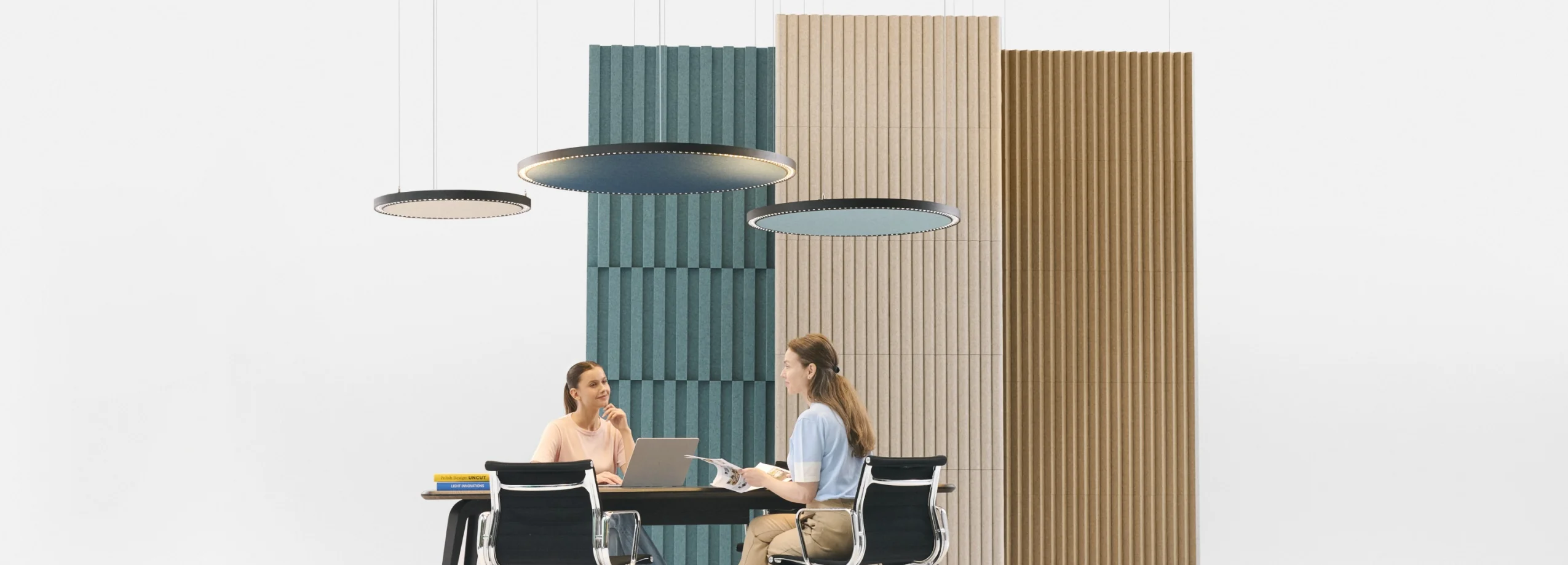
Acoustic lighting vs. acoustic panels
Finding the best acoustic office solution for 2026
Did you know that poorly managed acoustics can lead to a staggering 65% decrease in information retention during meetings? In today's world, where open-plan offices, bustling cafes, and even our homes are designed with fewer sound-damping materials, controlling noise is no longer a luxury; it's a necessity for productivity, comfort, and well-being. For years, the go-to solution for taming echoes and reducing reverberation has been acoustic panels. But a new contender has emerged, blending form and function seamlessly: acoustic lighting. This article dives deep into acoustic solutions, comparing acoustic lighting and traditional acoustic panels to help you decide which is the superior choice for your space. We'll explore the unique benefits of each, discuss their effectiveness, and highlight innovative products like the flexxica acoustic lamps, such as Alpha Duo, Sol, and Easy Zen and flexxica acoustic wall panels.
The unseen impact of sound: why acoustics matter
Before we pit acoustic lighting against acoustic panels, it's crucial to understand why acoustics are so important. Sound, especially unwanted noise, has a profound impact on our daily lives. In an office environment, excessive noise can lead to:
- Reduced productivity: Constant chatter, phone calls, and background hum make concentration difficult. Studies have shown that it can take up to 23 minutes to regain focus after an interruption.
- Increased stress levels: A noisy environment can trigger the body's stress response, leading to higher cortisol levels, fatigue, and irritability.
- Communication breakdowns: In open-plan spaces, it's harder to hear colleagues, leading to misunderstandings and repeated questions.
- Decreased employee satisfaction: A consistently unpleasant acoustic environment can negatively affect morale and job satisfaction.
Beyond the workplace, poor acoustics in public spaces such as restaurants and libraries can detract from the experience. In our homes, echoey rooms can make conversations feel distant and reduce the enjoyment of music or movies.
The science behind this is simple: sound waves reflect off hard surfaces such as walls, ceilings, and windows, creating reverberation. This reverberation builds up, making speech unintelligible and amplifying background noise. Acoustic treatments work by absorbing sound waves before they can be reflected, thus reducing echo and improving clarity.
Acoustic panels: the tried and true solution
Acoustic panels have been the workhorse of sound management for decades. These are typically made from porous materials such as fibreglass, mineral wool, or foam and are designed to absorb sound energy. They are usually mounted on walls or ceilings, strategically placed to break up sound reflections.
How acoustic panels work
When a sound wave hits an acoustic panel, instead of bouncing off, it penetrates the porous material. The sound energy is converted into tiny amounts of heat through friction as the sound waves vibrate the fibres within the panel. This absorption process significantly reduces the amount of sound energy that bounces back into the room, leading to a quieter and more pleasant acoustic environment.
Benefits of acoustic panels
- Proven effectiveness: Acoustic panels are a well-established, highly effective means of reducing reverberation and echo. Their performance in sound absorption is well-documented and predictable.
- Wide range of options: They come in a vast array of sizes, shapes, colours, and materials, allowing for customisation to match interior design schemes.
- Cost-effectiveness: For basic sound absorption needs, standard acoustic panels can be a relatively affordable solution, especially when purchased in bulk.
- Targeted treatment: Panels can be strategically placed in "first reflection points" (where sound bounces from a source to a listener) to maximise their impact on perceived sound quality.
- DIY-friendly: Many simpler panel designs can be installed by homeowners or office managers without the need for specialised contractors.
Limitations of acoustic panels
- Aesthetic challenges: While designs have improved, many acoustic panels can still look utilitarian or industrial, sometimes detracting from a desired aesthetic. They often appear as add-ons rather than integral parts of the design.
- Space requirements: Panels require wall or ceiling space, which might be limited in smaller rooms or heavily utilised areas.
- Maintenance: Fabric-covered panels can accumulate dust and may require occasional cleaning or replacement, especially in high-traffic areas.
- Single functionality: Their primary purpose is sound absorption. They don't offer any other functional benefits.
Types of acoustic panels
- Wall panels: The most common type, mounted directly onto walls. They vary in thickness and material density to achieve different absorption coefficients, like flexxica Wall Tiles.
- Ceiling clouds/baffles: Suspended from the ceiling, these are particularly effective in large, open spaces with high ceilings, as they address sound reflections from above, like flexxica acoustic Hash.
- Bass traps: Thicker panels placed in corners to absorb low-frequency sound, which is harder to control and often contributes to a "boomy" sound, like flexxica acoustic Tower.
Acoustic lighting: the innovative fusion
Acoustic lighting represents a newer, more integrated approach to sound management. These are lighting fixtures that are designed with built-in sound-absorbing materials. They combine the essential function of illumination with the benefits of acoustic treatment, offering a dual-purpose solution.
How acoustic lighting works
Similar to acoustic panels, acoustic lighting fixtures incorporate porous, sound-absorbing materials within their structure. These materials are often hidden behind fabric or integrated into the fixture's design. When sound waves reach the fixture, they are absorbed, much like they would be by a traditional panel. The key difference is that the acoustic treatment is part of an object that also serves a vital role: providing light.
The placement of acoustic lighting can be strategic. Pendant lights, for example, hang down into the "acoustic space" of a room, intercepting sound waves at various levels. Recessed lighting can also incorporate acoustic baffles.
Benefits of acoustic lighting
- Dual functionality: This is the most significant advantage. Acoustic lighting provides both light and sound absorption, reducing the need for separate solutions and potentially saving space.
- Integrated aesthetics: Acoustic lighting is designed to be visually appealing. It seamlessly integrates into the room's design, often enhancing it rather than detracting from it. Fixtures can be chosen to complement the overall style, from minimalist to modern.
- Space efficiency: By combining two functions into one fixture, acoustic lighting frees up wall and ceiling space that would otherwise be occupied by panels. This is especially valuable in smaller or densely furnished areas.
- Strategic placement: Pendant acoustic lights naturally hang in areas where sound energy is often present, making them effective at reducing reverberation. They can illuminate specific zones while simultaneously improving acoustics.
- Modern appeal: Acoustic lighting often features contemporary designs, adding a sophisticated and innovative touch to interiors.
Limitations of acoustic lighting
- Cost: Acoustic lighting fixtures are generally more expensive than basic acoustic panels due to their integrated technology and design considerations.
- Limited customisation (materials): While the look can be customised, the specific sound-absorbing materials and their acoustic performance might be less varied than with dedicated panels.
- Installation complexity: Installing integrated lighting fixtures can be more complex than simply mounting a panel and often requires electrical work.
- Light distribution: The design of the acoustic material might sometimes influence light distribution, although manufacturers work to mitigate this. The focus is on balancing both functions.
- Coverage area: A single acoustic lighting fixture may have a smaller direct sound-absorbing footprint than a large wall panel, potentially requiring more fixtures for comprehensive coverage in very large or echoey spaces.
Comparing acoustic lighting and acoustic panels head-to-head
Let's break down the comparison across key factors:
Effectiveness in sound absorption
- Acoustic panels: Generally, dedicated acoustic panels, especially thicker ones or specialised baffles, can offer very high sound absorption coefficients (NRC - Noise Reduction Coefficient). Their sole purpose is sound absorption, allowing manufacturers to optimise materials and thickness for maximum performance.
- Acoustic lighting: The effectiveness of acoustic lighting varies by product. Fixtures designed with substantial acoustic material can be highly effective, especially for mid-to-high frequencies. However, the need to integrate lighting components and maintain a certain aesthetic might mean compromises on the sheer volume of absorbent material compared to a dedicated panel of the same surface area. Their placement, often hanging in the middle of a room, can be very strategic for capturing airborne sound.
Winner (pure absorption): Typically, dedicated acoustic panels, particularly thicker ones and ceiling baffles, can achieve higher NRC ratings.
Aesthetics and design integration
- Acoustic panels: Range from basic to decorative, but often look like an addition rather than an integral part of the design. Some modern options with custom printing or unique shapes can be visually striking, but this often comes at a higher cost.
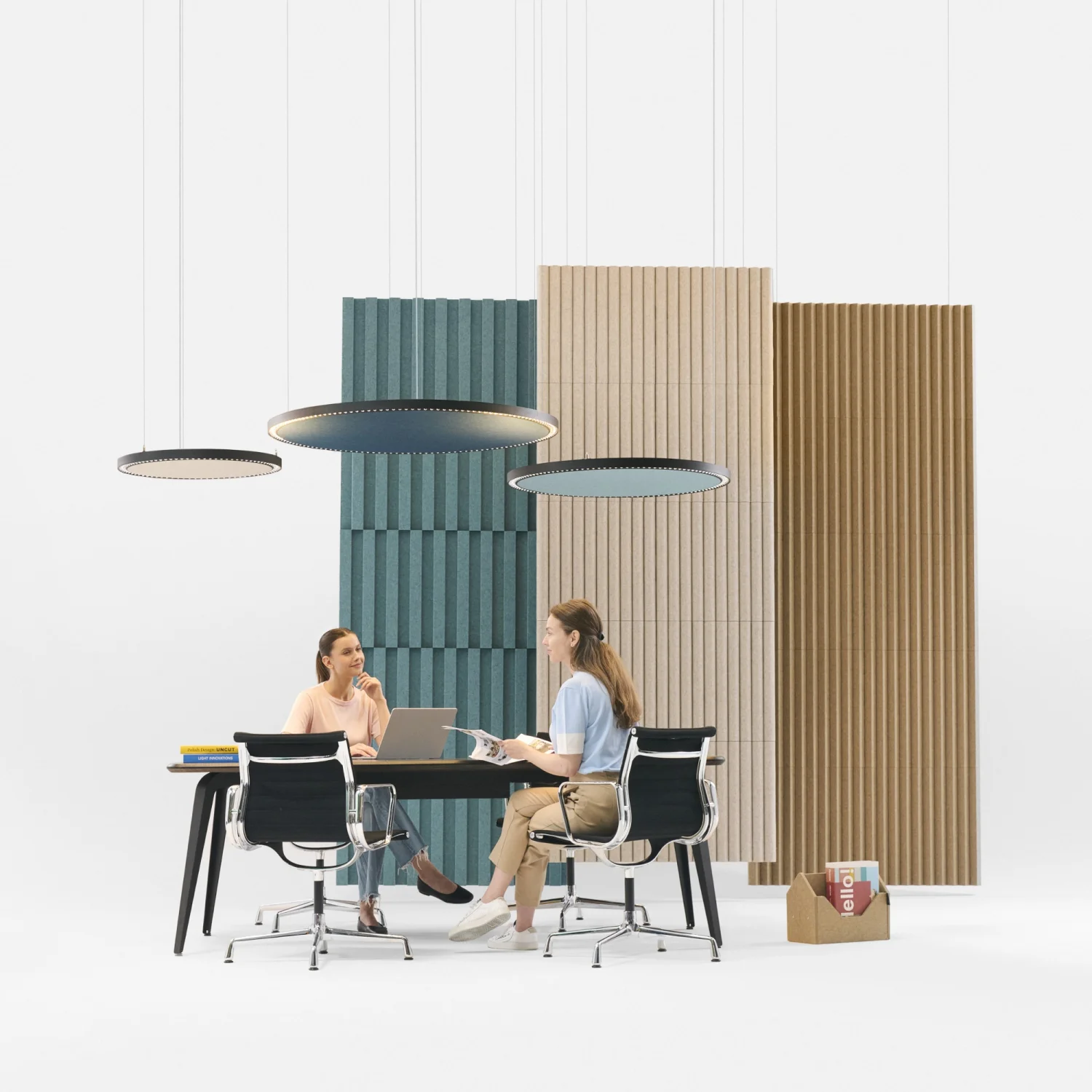
- Acoustic lighting: Designed from the ground up to be aesthetically pleasing. They enhance the look of a space by providing ambient or task lighting while simultaneously addressing acoustics. They feel like a natural part of the interior design. Products like the flexxica Alpha Duo showcase how lighting and acoustics can be merged into a sleek, modern form.
Winner (aesthetics): acoustic lighting.
Space efficiency
- Acoustic panels: Require dedicated wall or ceiling space. Can make rooms feel smaller or cluttered if not planned carefully.
- Acoustic lighting: Combines two functions, saving space. Pendant lights hang down, utilising vertical space without encroaching on usable floor or wall area.
Winner (space efficiency): acoustic lighting.
Cost
- Acoustic panels: Can be very affordable for basic options. High-end or custom panels can become expensive.
- Acoustic lighting: Generally requires a higher initial investment per unit, but the cost may be justified by its dual functionality, potentially offsetting the need to purchase separate lighting fixtures and acoustic treatments.
Winner (initial cost): acoustic panels (for basic needs). Winner (value/functionality): Potentially acoustic lighting, depending on needs.
Installation
- Acoustic panels: Relatively straightforward, often involving simple mounting hardware.
- Acoustic lighting: Requires electrical wiring and installation by a qualified electrician, similar to any lighting fixture.
Winner (ease of installation): acoustic panels.
Versatility and application
- Acoustic panels: Highly versatile. Can be used on walls, ceilings, as dividers, and in virtually any room where sound control is needed. Available in many shapes and sizes for targeted treatment.
- Acoustic lighting: Primarily used where lighting is also required. Pendant and ceiling-mounted options are common. Less suitable for areas that don't need direct illumination.
Winner (versatility): acoustic panels (in terms of placement options and environments).
Innovative solutions: flexxica acoustic lighting and acoustic panels
The lines between traditional acoustic solutions and modern design are blurring, and companies like flexxica are at the forefront. They offer a range of products that masterfully blend acoustic performance with contemporary lighting design.
flexxica acoustic lamps
flexxica's acoustic lamps are a prime example of the dual-functionality approach. These aren't just lights that happen to have some sound-dampening material; they are thoughtfully designed lighting fixtures where acoustics are a core feature.
-
flexxica Sol: This series often features sleek, minimalist designs. The Sol lamps integrate sound-absorbing materials within their structure, providing focused light while tackling echoes. They are ideal for creating specific illuminated zones with improved acoustic comfort, such as over workstations or meeting tables. The design ensures that the light output is efficient and pleasing, while the acoustic properties work to reduce distracting reverberation.
-
flexxica Zen: Representing a more organic or calming aesthetic, the Zen line might incorporate softer shapes and textures. These lamps aim to create a serene atmosphere not only through their lighting but also by softening sound. They are perfect for spaces where relaxation and focus are paramount, like breakout areas, lounges, or even home offices seeking a tranquil environment. The acoustic element works subtly in the background, ensuring conversations are clear, and the general ambience is calm.
flexxica acoustic panels
flexxica also offers dedicated acoustic panels that maintain their signature blend of design and function.
- flexxica Screen Glow: This product line often exemplifies a sophisticated approach to acoustic panelling. While primarily designed for sound absorption, the Screen Glow series might incorporate subtle lighting elements or feature premium finishes that elevate it beyond typical panels. They demonstrate that acoustic treatment doesn't have to compromise high-end interior design. These panels are engineered for effective sound absorption, reducing noise pollution and improving speech intelligibility in demanding environments like corporate offices, conference rooms, and public spaces.
The flexxica advantage
The strength of flexxica's offerings lies in their holistic approach. They understand that modern spaces require solutions that are not only effective but also aesthetically integrated.
- Design-led acoustics: flexxica prioritises the visual appeal of their products, ensuring they complement and enhance interior design rather than clashing with it.
- Material innovation: They utilise advanced sound-absorbing materials, often encased in stylish fabrics or integrated into unique fixture designs, to achieve optimal acoustic performance.
- Holistic solutions: Whether you need dedicated panels or integrated lighting, flexxica provides options that address both sound and light needs cohesively. This allows designers and business owners to create environments that are visually appealing, comfortable, and productive.
Choosing the right solution for your space
The decision between acoustic lighting and acoustic panels depends heavily on your specific needs, priorities, and the characteristics of the space.
When to choose acoustic panels:
- Maximum sound absorption is critical: If your primary goal is the highest possible level of sound absorption, especially for low frequencies, dedicated panels (including bass traps) might be the most effective route.
- Existing lighting is adequate: If your current lighting setup is sufficient and you only need to address acoustic issues, panels are a straightforward solution.
- Budget is a major constraint: Basic acoustic panels are often the most budget-friendly option for achieving a significant reduction in reverberation.
- Specific acoustic challenges: In spaces with complex acoustic issues, a combination of different types of panels (wall, ceiling, bass traps) might be required, offering more flexibility than integrated lighting.
- Flexibility in placement: If you need to place acoustic treatment in areas where lighting is not necessary or feasible, panels are the only option.
When to choose acoustic lighting:
- Aesthetic integration is a priority: If you want a seamless look and prefer solutions that enhance your interior design, acoustic lighting is the superior choice.
- Space-saving is important: In smaller rooms or areas with limited wall space, combining lighting and acoustics is highly efficient.
- Need for both light and sound control: When you require new lighting fixtures anyway, choosing acoustic lighting offers excellent value and functionality.
- Modern and innovative design: If you're aiming for a contemporary, cutting-edge aesthetic, acoustic lighting often fits the bill.
- Targeted acoustic improvement: Pendant acoustic lights can be strategically placed over specific zones (e.g., desks, seating areas) to precisely improve acoustics where needed, while also providing focused light.
Hybrid approaches
It's also common and often highly effective to use a combination of both acoustic lighting and acoustic panels. For instance, you might install acoustic pendant lights over a central collaboration area to provide light and dampen sound, while using wall panels in other parts of the room to address specific reflection points or add supplementary absorption. This hybrid approach allows for tailored acoustic treatment that balances aesthetics, functionality, and budget.
Case study snippets (illustrative examples)
Scenario 1: The open-plan office revamp
- Problem: High levels of ambient noise, difficulty concentrating, and frequent complaints about echo. Existing lighting is functional but unremarkable.
- Solution: A hybrid approach. Install flexxica Sol acoustic pendant lights over workstations and meeting pods to provide task lighting and reduce direct sound. Supplement with flexxica Wall Tiles acoustic panels on key wall sections identified as major reflection points.
- Outcome: Significant reduction in reverberation time, improved speech clarity, enhanced focus, and a more modern, inviting aesthetic. Employees report feeling less stressed and more productive.
Scenario 2: The trendy cafe overhaul
- Problem: Echoey space makes conversation difficult, leading to a noisy, uncomfortable atmosphere. Standard recessed lighting is functional but uninspired.
- Solution: Replace existing pendant lights with flexxica Zen acoustic lamps. Their softer design complements the cafe's ambience, while the integrated acoustics calms the noise. Add a few strategically placed wall panels disguised as art pieces.
- Outcome: A warmer, more intimate atmosphere. Customers can converse easily without shouting. The lighting adds a stylish touch, and the overall noise level is significantly reduced, improving the dining experience.
Scenario 3: The home recording studio upgrade
- Problem: The room has a noticeable echo and boominess, affecting recording quality. Standard acoustic foam looks unappealing.
- Solution: Use thicker, dedicated acoustic panels flexxica acoustic Wall Slabs for maximum sound absorption. Supplement with a subtle acoustic lighting fixture, perhaps a minimalist ceiling light with acoustic properties, to provide necessary illumination without adding unwanted reflections.
- Outcome: Dramatically improved recording clarity, reduced unwanted reverberation, and a more professional-looking studio space.
The future of acoustic solutions
As our built environments continue to evolve, the demand for intelligent, integrated solutions will only grow. Acoustic lighting is a testament to this trend, showcasing how technology and design can converge to solve everyday problems in elegant ways. Companies like flexxica are pushing the boundaries, proving that acoustic treatment doesn't have to be an afterthought; it can be a beautiful, functional, and essential part of a well-designed space.
The choice between acoustic lighting and acoustic panels isn't always mutually exclusive. Often, the best results come from understanding the unique acoustic challenges of a space and employing a combination of solutions. Whether you lean towards the proven efficacy of traditional panels or the innovative fusion offered by acoustic lighting, the goal remains the same: to create environments where we can communicate clearly, focus effectively, and feel comfortable.
Frequently Asked Questions
What is the primary difference between acoustic lighting and acoustic panels?
The primary difference lies in their functionality. Acoustic panels are devices designed solely to absorb sound. Acoustic lighting, on the other hand, performs a dual role: it provides illumination and incorporates sound-absorbing materials to reduce noise and reverberation within a space. Think of panels as specialists and acoustic lighting as versatile generalists.
Can acoustic lighting really absorb as much sound as acoustic panels?
The sound absorption capability varies greatly depending on the specific product design and materials used in both acoustic lighting and acoustic panels. High-performance acoustic panels, especially thicker ones or specialised baffles, are often optimised purely for sound absorption and may achieve higher Noise Reduction Coefficients (NRC). However, many modern acoustic lighting fixtures are designed with substantial sound-absorbing cores and can be highly effective, particularly for mid- to high-frequency sounds. Their placement, often hanging in the room's acoustic space, can make them very efficient. For most common office or residential environments, well-designed acoustic lighting provides a significant improvement in acoustics.
Where should I place acoustic panels or acoustic lighting?
The placement is crucial for effectiveness. For acoustic panels, identify "first reflection points" on walls and ceilings – areas where sound bounces directly from a source (like a speaker or person talking) to a listener. Ceiling clouds or baffles are effective in large rooms with high ceilings. For acoustic lighting, pendant lights naturally hang into the sound field and are great over workstations, tables, or seating areas. Their placement should consider both lighting needs and sound wave paths. Corners are also important for controlling low-frequency sound and often require specialised bass traps (panels).
Are acoustic lighting fixtures more expensive than acoustic panels?
Generally, acoustic lighting fixtures have a higher initial purchase price per unit compared to basic acoustic panels. This is due to the integrated technology (lighting components) and the often more complex, design-focused manufacturing process. However, when you factor in the need for separate lighting fixtures, acoustic lighting can offer better overall value by combining two essential functions into one product. The cost-effectiveness depends on whether you would have needed to purchase both lighting and acoustic treatments separately.
What types of sounds do acoustic treatments (both panels and lighting) help reduce?
Acoustic treatments primarily help reduce reverberation and echo. This means they make the room sound less "live" or "boomy." They are most effective at absorbing mid- to high-frequency sounds, such as speech, typing, and general background noise. While some specialised treatments (like thick bass traps) can help with low frequencies, standard acoustic panels and lighting are less effective at absorbing deep bass sounds, which tend to be more omnidirectional and harder to control. They improve sound clarity and reduce overall noise levels by preventing sound from bouncing around excessively.
Can I use acoustic lighting in my home?
Absolutely! Acoustic lighting is becoming increasingly popular for home use. It's ideal for home offices where focus is needed, living rooms to improve the acoustics for movie watching or conversation, dining areas, or even bedrooms to create a more tranquil atmosphere. Many designs are available that fit seamlessly into residential decor, offering both functional lighting and a more peaceful sound environment.
Navigating the world of acoustic solutions can seem complex, but understanding the fundamental differences and benefits of acoustic lighting versus acoustic panels empowers you to make informed decisions. Acoustic panels remain a robust and effective solution, offering maximum absorption potential and flexibility. Acoustic lighting, however, presents an innovative and aesthetically integrated alternative, combining essential illumination with sound-dampening properties. For spaces where design and efficiency are paramount, acoustic lighting offers a compelling advantage, seamlessly blending into the environment while improving its sonic qualities. Products like the flexxica Sol and Zen lamps exemplify this fusion, proving that function doesn't have to sacrifice form. Yet, in situations demanding the highest levels of acoustic control or where lighting is already adequate, specialised acoustic panels, perhaps from lines such as flexxica's Alpha Duo, might be the optimal choice. Ultimately, the best solution often lies in a thoughtful assessment of your specific needs. Consider the size and layout of your space, your budget, your aesthetic goals, and the primary acoustic challenges you face. In many cases, a hybrid approach that combines the strengths of acoustic lighting and acoustic panels will yield the most harmonious and effective results, creating environments that are not only visually appealing but also acoustically comfortable and conducive to focus, communication, and well-being.
More news
See all
flexxica at ORGATEC 2026
See flexxica products at ORGATEC 2026, taking place from October 27–30, 2026, at the Koelnmesse trade fair centre in Cologne, at the Glass System stand.

flexxica at Architect@Work Paris 2026
flexxica will be exhibiting at Architect@Work Paris on 21–22 October 2026 at the Grande Halle de la Villette. Come and see our acoustic lighting solutions in person.


